
Source Institutions
Source Institutions
Add to list Go to activity
Activity link broken? See if it's at the internet archive
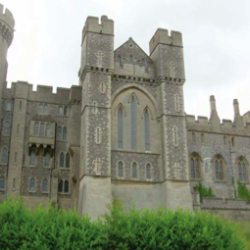
In this three-day lesson, learners identify two-dimensional shapes used in castle construction, create a castle collage using assorted shapes, and design tapestries using repeated patterns of color, shape, or line. They understand that the castle’s primary purpose was to keep the community safe but that it also served as a home for the lord and his family. This activity is featured on pp.37-38 (part of a lesson that begins on page 35) of the "LEGO® Castle Adventure" unit of study for grades K-6.
- 45 to 60 minutes
- 1 to 7 days
- $5 - $10 per group of students
- Ages 4 - 8
- Activity, Lesson/Lesson Plan, Model
- English
Quick Guide
Materials List (per group of students)
- pictures and drawings of castles
- pre-cut geometric shapes (assorted sizes of squares, rectangles, circles, and triangles)
- Visual Aid: The Parts of a Castle (page 47)
- index cards with names of castle parts, one term per card
- picture or sample of tapestry with repeated pattern
- sentence strips for pattern
- measurement tools including rulers and meter sticks
- paper
- glue
- scissors
- a variety of coloring tools
- Adventures in the Middle Ages by Linda Bailey and Bill Slavin
Subjects
-
Mathematics
-
Algebra
- Patterns
-
Geometry
- Plane Geometry
-
Algebra
-
The Nature of Technology
-
Technology and Society
- Impacts of Technology
- Technology and History
-
The Design Process
- Invention and Innovation
-
Technology and Society
Informal Categories
- Arts and Crafts
- Historical Reenactment
- Literature
- Model Building
Audience
To use this activity, learners need to:
- see
- see color
- read
- touch
Learning styles supported:
- Links STEM to other topics of interest such as arts and humanities
- Involves hands-on or lab activities
Other
Includes alignment to state and/or national standards:
Includes assesments for student learning:
This resource is part of:
Access Rights:
- Free access
By:
- The Children's Museum of Indianapolis; Reitsma, Dr. Beverly A. ; Keene, Sue ; Mercer, Tonya ; Kiplinger, Angie ; The Lego Group
Rights:
- All rights reserved, The Children's Museum of Indianapolis, 2009
Funding Sources:
- Fazoli's
- Coca-Cola