 With support from the Institute of Museum and Library Services, the Children’s Creativity Museum and UC Berkeley’s Lawrence Hall of Science are updating howtosmile.org to meet the growing needs of informal educators offering at-home STEM educational programming during the COVID-19 pandemic. The project will establish a network of 10 new partner museums to expand the howtosmile digital library, which provides high-quality STEM activities to an active community of informal educators through best practices in digital resource management-with almost 3,500 cataloged resources. The project is also updating the digital library's legacy cataloging system to reduce complexity and increase security.


 "Last year this COVID-19 scared me. It’s not so scary when you’re doing science about it with everyone." This quote from a youth participant captured one of the ambitions of new activities developed by The Lawrence Hall of Science as part of the Communities for Immunity initiative.
 Have you ever wondered what challenges astronauts of the future will encounter when they live and work on the Moon? Thanks to
  Whether you live in the heart of a big city, the rural countryside, or any place in between, our backyards and neighborhoods are full of incredible nature for us to explore. Nature journaling is a STEAM activity that allows us to mindfully appreciate all of the diverse life around us. Not only is nature journaling a great way to get outside and have fun, it also can teach us and our learners important science process and creativity skills. And the best part? All you need is a notebook, something to write with, and a bit of curiosity!


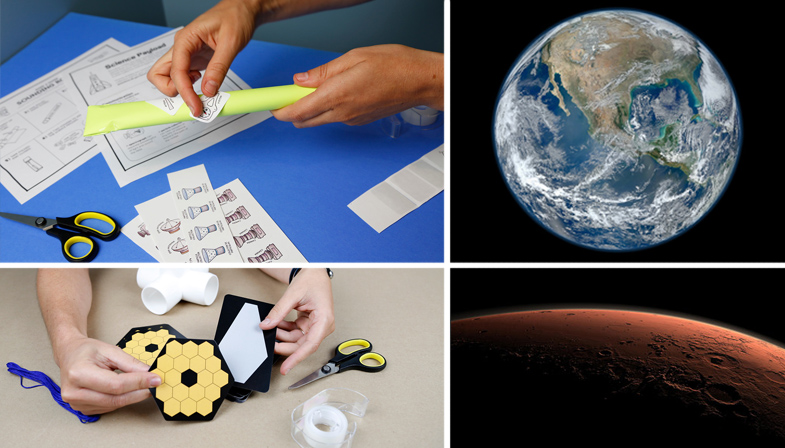 In collaboration with NASA, the National Informal STEM Education Network (NISE Net) has released a NEW set of engaging, hands-on Earth and space science activities with connections to science, technology, and society.
 The new year brings another award for howtosmile.