
Search Results
Showing results 1 to 20 of 26
Engineered Sports
Source Institutions
In this activity, learners explore the concept of how aerospace engineering has impacted sports, specifically exploring the design of golf balls.
Ball Bounce Experiment
Source Institutions
In this activity, learners investigate the properties of different types of balls.

Hockey Stick Power!
Source Institutions
This activity (on page 2 of the PDF under SciGirls Activity: Hockey) is a full inquiry investigation into how a hockey stick’s flex affects shooting power and accuracy.
Batter Up!
Source Institutions
This activity (on page 3 of the PDF under GPS: Baseball Activity) is a full inquiry investigation into how "bounciness" relates to the distance a ball will fly when hit off a batting tee.
Neural Network Signals
Source Institutions
In this activity, learners create an electrical circuit and investigate how some dissolved substances conduct electricity.
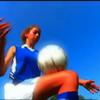
Super Bounce
Source Institutions
In this activity (on page 1 of the PDF under SciGirls Activity: Soccer Ball Kick), learners will investigate the transfer of energy using sports equipment.
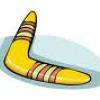
Boomerang
Source Institutions
Everybody loves boomerangs! In this activity about force and motion, the learners will experiment with boomerangs and explore how they work. This is a great activity to get learners up and moving.
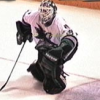
Think Fast!: Just How Quick Are You?
Source Institutions
This is an activity about reaction times. Just how quickly must an NHL goalie respond to save a shot, and how does your reaction time compare?

Skateboard Disaster
Learners examine collisions between two skateboards carrying different masses. They learn about conservation of momentum in collisions.
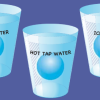
What Counts in Bounce
Source Institutions
In this activity learners compare the bounciness of warm and cold racquetballs to see if temperature makes a difference in how well they bounce.
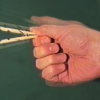
Clothespin Workout
Source Institutions
This is a great activity about human energy production. Learners will work out with a clothespin to investigate why hockey players jump on a stationary bike after an intense game.
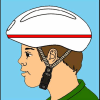
Design a Safer Bicycle Helmet
Source Institutions
In this activity, learners design a bicycle helmet. Participants will explore the design of bicycle helmets to gain an appreciation for the role that helmet layers play protecting the head.
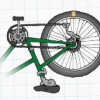
Pedal Power
Source Institutions
In this engineering activity, learners examine bicycle mechanics and gear ratios. Learners determine which gears will help them bike a set course in the shortest amount of time.
Multi-Variable Relations: Stressed to the Breaking Point
Source Institutions
In this math lesson, learners explore the relationship between the thickness of a spaghetti bridge, the length of the bridge, and the amount of weight that can be supported by the bridge.
Slowing the Flow
Source Institutions
In this experiment, pairs of learners explore how cold water affects circulation. The mammalian diving reflex (MDR) slows circulation when the body is exposed to cold water.
Fun with Speedboats
Source Institutions
In this activity, learners explore how boats are engineered to achieve speed.
Twirling Rope Frequency
Source Institutions
In this activity (page 1 of the PDF under SciGirls Activity: Double Dutch), learners will stand twelve feet apart swinging a rope at the slowest tempo possible while someone uses a stopwatch to record
Air, It's Really There
Source Institutions
This lesson focuses on molecular motion in gases. Learners compare the mass of a basketball when it is deflated and after it has been inflated.
Bag of Bones
Source Institutions
In this activity, learners will use cereal to conduct an experiment and investigate how decreased bone density is related to increased risk of bone fracture.
Good Stress
Source Institutions
In this activity about physical stress (page 28 of PDF), learners discover that muscles and bones need to work to stay strong.