
Search Results
Showing results 21 to 29 of 29
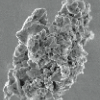
Properties of Dust
Source Institutions
In this activity, learners carry out a scientific investigation of dust in their classroom. Learners produce an analysis on graph paper of the dust they collect over the course of a few days.
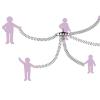
Exploring the Solar System: Moonquakes
Source Institutions
In this activity, learners sort different natural phenomena into categories (they occur on Earth, on the Moon, or on both), and then model how energy moves during a quake using spring toys.
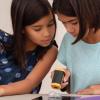
Exploring Earth: Temperature Mapping
Source Institutions
This activity models the way Landsat satellites use a thermal infrared sensor to measure land surface temperatures.
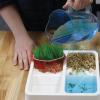
Exploring Earth: Land Cover
Source Institutions
This activity models some of the ways natural processes, such as erosion and sediment pollution, affect Earth’s landscape.

Exploring Black Holes and Gravity
Source Institutions
This fun and simple hands-on astronomy activity lets learners imagine what would happen if our Sun were replaced with a black hole.
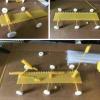
DIY Pasta Rover
Source Institutions
In this activity, learners design and build a NASA rover using raw pasta and candy with a limited imaginary budget.
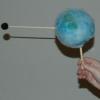
Exploring Strange New Worlds
Source Institutions
This fun and simple hands-on astronomy activity lets learners explore model planets (that they or an educator will create), using methods NASA scientists use to explore our Solar System.
Finding the Right Crater
Source Institutions
This quick demonstration (on page 11 of PDF) allows learners to understand why scientists think water ice could remain frozen in always-dark craters at the poles of the Moon.
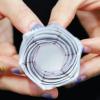
Space Origami: Make Your Own Starshade
Source Institutions
In this activity, learners cut out and fold their own collapsible origami starshade, an invention that shields a telescope's camera lens from the light of a distant star so that NASA scientists can ex