
Search Results
Showing results 1 to 20 of 90
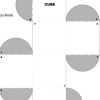
Fold a Crystal
Source Institutions
Rocks are made of minerals, and minerals often have crystal shapes. In this fun activity about geometry in nature, learners create their own crystal shapes out of paper.
String Genome
Source Institutions
In this biology activity (page 5 of the PDF), learners use yarn and sticky labels to build a model of a DNA strand. They discover that DNA is very long, very skinny, and packs well into cells.
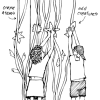
Kelp Critters
Source Institutions
This marine biology activity (on pages 11-17) introduces learners to kelp (seaweed) forests that grow in the ocean and are home to many species of sea animals.

Boomerang
Source Institutions
Learners trace, cut out and fly a boomerang, outdoors or in a large indoor space.
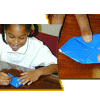
Thinking in Three Dimensions
Source Institutions
In this activity, learners create three-dimensional shapes by making some origami models of simple boxes and containers.
Space Stations: Sponge Spool Spine
Source Institutions
In this activity, learners simulate what happens to a human spine in space by making Sponge Spool Spines (alternating sponge pieces and spools threaded on a pipe cleaner).
Fossils: Observing, Making and Learning
Source Institutions
In this activity, learners explore how casts of fossilized bones are created and used to learn about dinosaurs. Learners make observations, draw diagrams and share their findings.

Make a Dinosaur Model
Source Institutions
In this activity, learners explore dinosaur skeletons, anatomy, and locomotion. Learners compare and contrast dinosaur skeletons and drawings.
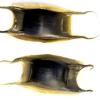
Mermaid's Purse
Source Institutions
In this activity (page 2 of pdf), learners craft a model of a skate egg case and come to understand that cartilaginous fish such as sharks and shakes employ reproductive strategies that differ from th
Build a Bug
Source Institutions
In this activity (on page 2 of the PDF), learners use art supplies to build models of insects, both real or imagined.
Does the Moon Rotate?
Source Institutions
This fun and simple hands-on astronomy activity lets learners make 3-dimensional models of the Earth and Moon.
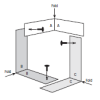
Building a 3-D Space Maze: Escher Staircase
Source Institutions
In this activity (page 95 of the PDF), learners create Escher Staircase models similar to those that were used by Neurolab's Spatial Orientation Team to investigate the processing of information about

Model the Sun and Earth
Source Institutions
In this activity, learners make scale models of the Sun and Earth out of paper mache.
Going Buggy: Three Body Parts
Source Institutions
In this fun snack and craft activity, young learners make "Ants on a Log" and their own model of an insect. The purpose is to learn the three main insect body parts—head, thorax and abdomen.

Geometry Construction: Polyhedral Playthings
Source Institutions
In this activity, learners create 3D geometric shapes using straws and pipe cleaners.
Flower Engineers
Source Institutions
This activity (on pages 24-29) combines science and art to introduce learners to how different animal pollinators spread pollen from one plant to another, and how certain shapes, colors, and smells of
Size, Scale and Models
Source Institutions
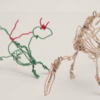
In this activity, learners take measurements and create charts to learn about the size of dinosaurs and their relative scale to humans.
Bird Feeders
Source Institutions
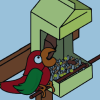
In this activity, learners build a bird feeder or feeders to attract birds for observation.
Marshmallow Models
Source Institutions
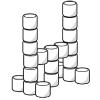
No glue is needed for learners of any age to become marshmallow architects or engineers.

Make a Dinosaur
Source Institutions
In this activity, learners explore the size and scale of dinosaurs. Learners listen to "Dinosaurs, Dinosaurs" by Byron Barton to understand some background information about dinosaurs.