
Search Results
Showing results 1361 to 1380 of 2481
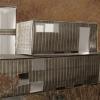
Make a Model of a Home Made From Shipping Containers
Source Institutions
In this activity, learners watch a video to learn about a couple who built a home out of shipping containers in Brooklyn, New York.
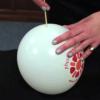
Balloon Kebabs
Source Institutions
In this demonstration, learners observe the effects of density and pressure by attempting to make "balloon kebabs." Learners will try to insert a wooden skewer all the way through an inflated balloon
Shimmering Lenses
Source Institutions
In this activity, learners use Jell-O to explore lenses. Learners cut Jell-O into convex and concave lens shapes and examine how light exits each lens in a darkened room.

Making Naked Eggs: Eggs Without Shells
Source Institutions
This is an activity about acid-base reactions using eggs and vinegar. Learners place eggs inside a container of vinegar and leave to soak overnight.
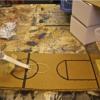
Finger Basketball
Source Institutions
In this activity, learners build mini-basketball courts using cardboard and measuring spoons. Use this activity to introduce learners to catapults, forces, and levers.
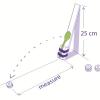
Volcanic Material Catapult Investigation
Source Institutions
This activity (located on page 3 of the PDF under GPS: Lava Flow Activity) is a full inquiry investigation into the relationship between an object’s mass and the distance it is thrown by a catapult.
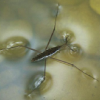
Breaking the Tension: Surface Tension 1
Source Institutions
Learners explore how the attractive forces between water molecules create surface tension and allow certain objects to float on the surface of water.
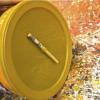
Rolling Returns
Source Institutions
In this activity, learners build a special rolling can that returns back to you when you push it forward. Use this activity to demonstrate the transfer of energy between kinetic and potential energy.
Good Stress
Source Institutions
In this activity about physical stress (page 28 of PDF), learners discover that muscles and bones need to work to stay strong.
Community Wind Project
Source Institutions
In this thought-provoking activity, learners plan a hypothetical project to build and operate wind turbines in their community.
Mummy Magic
Source Institutions
Make your own mummy! Using a combination of salts, transform an apple into a mummy and discover how the Ancient Egyptians used drying as one step in the mummification process.
Clean Me Up, Snotty
Source Institutions
Learners will explore the chemistry of mucous and its importance to our health by following a process to make their own replica "snot." The activity includes a time and age recommendation, a materials
Pearlescent Pigments
Source Institutions
This is written as a display, but can easily be adapted to a hands-on activity. Learners observe and shake containers of shiny liquids.
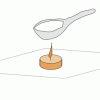
Finding the Carbon in Sugar
Source Institutions
In this activity about combustion and energy, learners observe a burning candle in a sealed jar and the burning of white sugar.
Paper Chromatography with Leaves
Source Institutions
In this activity on page 5 of the PDF (Plants—The Green Machines), learners use chromatography to separate and identify pigments within various leaves.
Cabbage Juice Indicator
Source Institutions
In this chemistry activity, learners make indicator solution from red cabbage. Then, learners test everyday foods and household substances using the cabbage juice indicator.
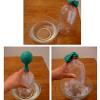
Turning the Air Upside Down: Warm Air is Less Dense than Cool Air
Learners cover a bottle with a balloon. When they immerse the bottle in warm water, the balloon inflates. When they immerse the bottle in a bowl of ice, the balloon deflates.
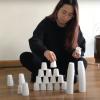
Cup Towers
Source Institutions
In this activity, learners explore different ways to stack cups to meet a personal goal.
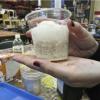
Hot & Cold
Source Institutions
In this activity, learners experiment with hydrogen peroxide, vinegar, yeast, and baking soda to produce hot and cold reactions. Use this activity to demonstrate exothermic and endothermic reactions.
Seasons and Shadows: Investigate How Shadows Shift Throughout the Year
Source Institutions
In this activity you'll see how the sun's tilt on its axis changes the length of shadows. For example, why is your shadow longer in winter than in summer?