
Search Results
Showing results 21 to 32 of 32
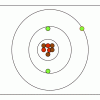
M&M® Model of the Atom: Edible Subatomic Particles
Source Institutions
In this activity, learners use colored candy to represent subatomic particles and make a model of an atom (Bohr model).
Stability of Egg White Foams
Source Institutions
In this chemistry meets cooking activity, learners compare the stability of egg white foams with various additives.
Milk Plastic
Source Institutions
In this activity, learners transform everyday milk into small plastic figurines and jewelry. Use this activity to introduce learners to monomers and polymers.
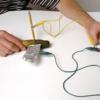
Kosher Dill Current: Make Your Own Battery!
Source Institutions
This is an activity that demonstrates how batteries work using simple household materials. Learners use a pickle, aluminum foil and a pencil to create an electrical circuit that powers a buzzer.
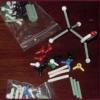
Molecular Menagerie
Source Institutions
In this activity, learners use molecular model kits to construct familiar molecules like lactose, caffeine, and Aspirin.
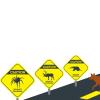
Caution! Wildlife Crossing
Source Institutions
In this design challenge, learners use their creativity and imagination to design and test a wildlife crossing for their favorite animal.
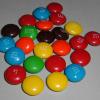
Radioactive Decay of Candium
Source Institutions
In this simulation, learners use M&M™ candy to explore radioactive isotope decay.
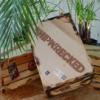
Shipwrecked!
Source Institutions
In this activity, learners are challenged to design and build the tools they need to survive being shipwrecked on a deserted island.
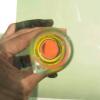
Rotating Light
Source Institutions
In this activity, learners explore what happens when polarized white light passes through a sugar solution.
Cook with a Solar Oven
Source Institutions
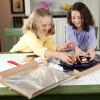
In this activity, learners make their own solar oven to bake s'mores and learn about how solar energy is absorbed on Earth.
What Molecules Make the Holes in Bread?
Source Institutions
In this activity, learners will discover why there are holes in bread.
Wintergreen
Source Institutions
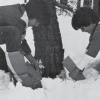
In this outdoor, winter activity, learners find living green plants under the snow and determine the light and temperature conditions around the plants.