
Search Results
Showing results 1 to 20 of 32
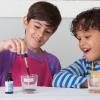
What Does Spit Do?
Source Institutions
Some animals can swallow food whole, but humans have to chew. In this activity, learners will investigate what saliva does chemically to food before we even swallow.
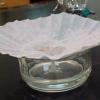
Chromatography
Source Institutions
In this chemistry activity, learners will separate a mixture of FD&C dyes (colors certified and allowed by the US for the Food, Pharmaceutical, Cosmetics & Personal Care industry) to practice
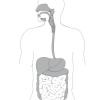
Digestion
Source Institutions
In this food science activity, learners explore digestion and proteins by observing the action of meat tenderizer on luncheon meat.
Push Me a Grape
Source Institutions
In this physics activity, learners experiment with the attractive and repulsive power of magnets.
How to Extract DNA From Anything Living
Source Institutions
In this genetics activity, learners discover how to extract DNA from green split peas.
Cabbage Chemistry
Source Institutions
In this chemistry activity (page 5 of the PDF), learners make an acid-base indicator using cabbage. Learners then explore how various subtances react with this indicator.

Guar Gum Slime
Source Institutions
In this activity, learners create a gelatinous slime using guar gum powder and borax. Educators can use this simple activity to introduce learners to colloids.
Crunch and Munch Lab
Source Institutions
In this activity, learners use three types of cheesy snacks--cheese balls, cheese puffs, and Cheetos--to learn about polymers.
Cabbage Indicator
Source Institutions
In this fun chemistry activity (page 3 of the pdf), learners use cabbage juice to determine the pH of several substances.
Exploring Baking Powder
Source Institutions
In this activity, learners examine baking powder, a combination of three powders: baking soda, cream of tartar, and cornstarch.
Moo Glue
Source Institutions
Using a milk-based recipe, learners create "moo glue" which is basically white school-type glue. The "secret ingredient" in milk that helps make glue is a chemical called casein.

Leaning Tower of Pasta
Learners build structures from spaghetti and marshmallows to determine which structures are able to handle the greatest load.
Space Jell-O
Source Institutions
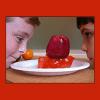
Albert Einstein proved that space bends around anything that has mass. This activity uses Jell-O's ability to bend around objects as a model for space bending around planets and stars.

Ice Cream Freeze
Source Institutions
In this fun and delicious chemistry activity (page 1 of the PDF), learners will explore the difference between physical and chemical change by making homemade ice cream.
Investigating the Line
Source Institutions
In the related activity called "Colors Collide or Combine," learners are intrigued by the apparent "line" that forms where colors from M&M coatings meet but do not mix.
Stability of Egg White Foams
Source Institutions
In this chemistry meets cooking activity, learners compare the stability of egg white foams with various additives.
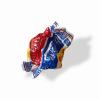
Wrap It Up!
Source Institutions
In this Energy and Environment activity (page 9 of the PDF), learners calculate the mass of a piece of gum, compare it to the mass of the gum's packaging, and then create a bar graph of the results.

M&M's in Different Temperatures
Source Institutions
Learners design their own experiment to investigate whether the temperature of the surrounding water affects the rate at which the colored coating dissolves from an M&M.
M&M's in Different Sugar Solutions
Source Institutions
In this activity, learners investigate whether having sugar already dissolved in water affects the speed of dissolving and the movement of sugar and color through the water.
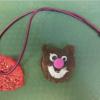
Milk Plastic
Source Institutions
In this activity, learners transform everyday milk into small plastic figurines and jewelry. Use this activity to introduce learners to monomers and polymers.