
Search Results
Showing results 41 to 60 of 193

Mixing and Unmixing in the Kitchen
Source Institutions
In this chemistry investigation, learners combine common cooking substances (flour, baking powder, sugar, salt, pepper, oil, water, food coloring) to explore mixtures.
Biotech in a Bag
Source Institutions
In a series of three experiments, learners explore the basics of biotechnology using self-locking plastic baggies. Each experiment demonstrates a phenomenon or principle of biotechnology.
Apples with Appeal
Source Institutions
In this activity, learners investigate why apples turn brown. Learners discover that lemon juice interferes with the reaction that causes the browning.
Sweet Measurements
Source Institutions
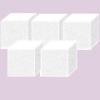
In this activity on page 3 of the PDF, learners investigate how much sugar is in a soda. Learners use sugar cubes to measure and calculate the amount of sugar in a bottle of soda.
Glowing Tonic
Source Institutions
In this sunny day activity, learners compare how a cup of water and a cup of tonic water reflect or refract light in the sun.

Static Shock!
Source Institutions
In this hands-on activity, learners explore static electricity through the use of common household products. They also explore the connection between static electricity and cold weather.
A Stand-up Egg
Source Institutions
In this science trick, learners get an egg to stand-up on its long-axis vertical to a table's top.
Physics in the Kitchen: Sink or Swim Soda
Source Institutions
In the kitchen, learners can perform their own density investigation.
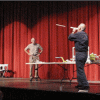
Marshmallow Puff Tube
Source Institutions
In this demonstration/activity, learners observe as a regular size marshmallow is blown through a tube made from a manila file folder.
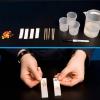
Candy Chromatography
Source Institutions
Learners analyze candy-coated sweets using chromatography. Learners use this method to separate the various dyes used to make colored candy.
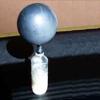
Yeast-Air Balloons
Source Institutions
In this activity, learners make a yeast-air balloon to get a better idea of what yeast can do. Learners discover that the purpose of leaveners like yeast is to produce the gas that makes bread rise.
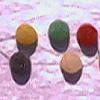
Gumdrop Chains and Shrinky Necklaces
Source Institutions
In this activity, learners thread gumdrops together to make a model of a polymer.
Pepper Scatter
Source Institutions
In this activity, learners explore the forces at work in water. Learners experiment to find out what happens to pepper in water when they touch it with bar soap and liquid detergent.
Growing Rock Candy
Source Institutions
In this activity, learners make their own rock candy. Crystals will grow from a piece of string hanging in a cup of sugar water. The edible crystals may take up to a week to form.
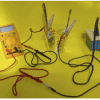
Cake by Conduction
Source Institutions
In this demonstration, cook a cake using the heat produced when the cake batter conducts an electric current.
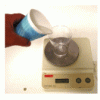
Toast a Mole!
Source Institutions
In this quick activity, learners drink Avogadro's number worth of molecules - 6.02x10^23 molecules!
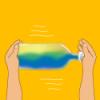
Making Waves
Source Institutions
Investigate the interaction of liquids of different densities and experiment with wave patterns with this hands-on activity.
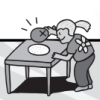
Electric Gelatin
Source Institutions
In this activity, learners explore static electricity and electrical charges while experimenting with an inflated balloon, unflavored gelatin powder, and a wool sweater.
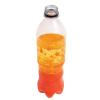
Liquid Lava Layers
Source Institutions
In this activity, learners explore the concepts of density and basic chemical reactions as they create a homemade lava lamp effect using water, oil, food coloring, and Alka-Seltzer tablets.
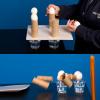
Egg Drop
Source Institutions
Perform this classic inertia demonstration to illustrate the transfer of potential energy to kinetic energy.