
Search Results
Showing results 181 to 200 of 276
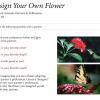
Design a Flower
Source Institutions
In this activity, learners learn about the adaptations that flowers have developed which support pollination. Learners also list their personal preferences (i.e.
Three Bean Salads
Source Institutions
This game teaches ratio and proportion by having learners make "salads" that combine three types of beans in different combinations.
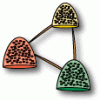
Mighty Molecules
Source Institutions
In this activity, learners use marshmallows and gum drops to construct seven models of molecules. Learners classify (solid, liquid or gas) and draw diagrams of the molecules.
¡Helados!
Source Institutions
En esta tira cómica, Mateo y Cientina emplean su conocimiento de la química y las medidas para esta actividad deliciosa - ¡hacer helado!
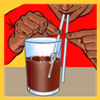
Stadium Seat Science
Source Institutions
Take the two-straw challenge and discover how pressure affects vacuums! In this activity, learners experiment with drinking through one and two straws, comparing the amount of liquid they can drink.
A Slime By Any Other Name
Source Institutions
This fun video explains how to make a batch of oobleck (or slime) and why this special substance is known as a "non-Newtonian" fluid. Watch as Mr.
Why is the Sky Blue?
Source Institutions
In this activity, learners use a flashlight, a glass of water, and some milk to examine why the sky is blue and sunsets are red.
Oily Ice
Source Institutions
In this activity, learners experiment with the density of ice, water, and oil. Learners will discover that the density of a liquid determines whether it will float above or sink below another liquid.
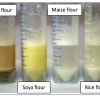
Wheat Evolution: Sedimentation Testing
Source Institutions
In this activity (Page 30 of PDF), learners investigate the evolution of wheat by conducting sedimentation tests on different flours.
Animal & Plant Cell Slides
Source Institutions
In this activity, learners make slides of onion cells and their own cheek cells. Use this lab to teach learners how to prepare microscope slides and use a microscope.
Chew that Gum
Source Institutions
In this quick activity (page 1 of PDF under SciGirls Activity: Exercise and Memory), learners will investigate what happens to bubble gum when it is chewed for 5-10 minutes.
A Recipe for Air
Learners use M&Ms® (or any other multi-color, equally-sized small candy or pieces) to create a pie graph that expresses the composition of air.

Dye Like A Natural
Source Institutions
In this activity, learners stain fabrics--on purpose!

Solar Convection
Source Institutions
In this activity, learners add food coloring to hot and cold water in order to see how fluids at different temperatures move around in convection currents.
How Does Water Climb a Tree?
Source Institutions
In this activity, learners conduct an experiment to explore how water flows up from a tree's roots to its leafy crown.
Ziptop Bag Chemistry
Source Institutions
In this chemistry activity, learners perform three chemical reactions in a sealed zip-top bag. Learners will record their observations and classify the changes as chemical or physical.
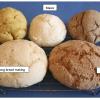
Wheat Evolution: Dough Rising and Baking
Source Institutions
In this activity (Page 25 of PDF), learners investigate the evolution of wheat by creating dough from different flours, observing the samples of dough as they rise, and then baking the dough.
Cool It!
Source Institutions
In this fun hands-on activity, learners use simple materials to investigate evaporation. How can the evaporation of water on a hot day be used to cool an object? Find out the experimental way!
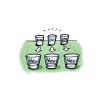
Dissolving Different Liquids in Water
Source Institutions
In this activity, learners add different liquids to water and apply their working definition of “dissolving” to their observations.
Scent Tag
Source Institutions
In this matchmaking activity (on page 2 of the PDF under GPS: Animal Scent Activity), learners will each have a scented cotton ball taped to their shoulder. The scent (e.g.