
Search Results
Showing results 21 to 27 of 27
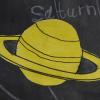
Solar System on a Stick
Source Institutions
Learners build a model of the planets in the solar system. In their model, the planets are spaced in their relative distance from the Sun.
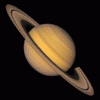
Build a Solar System
Source Institutions
In this activity, learners make a scale model of the Solar System and learn the real definition of "space." Learners use the online calculator to create an appropriate scale to use as a basis for thei
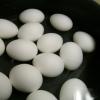
Salt 'n Lighter
Source Institutions
In this activity, learners discover that as the salinity of water increases, the density increases as well. Learners prove this by attempting to float fresh eggs in saltwater and freshwater.
How Big is Small
Source Institutions
In this classic hands-on activity, learners estimate the length of a molecule by floating a fatty acid (oleic acid) on water.

Using Different Models of Earth
Source Institutions
In this activity, learners explore how the shapes, sizes, and distances of land masses appear differently on two different models of Earth: an icosahedron and a flat map.
Transit Tracks
Source Institutions
In this space science activity, learners explore transits and the conditions when a transit may be seen.
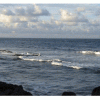
Catch a Wave: How Waves are Formed
Source Institutions
In this three-part activity, learners explore how waves are formed and why some waves are bigger than others. First, learners observe waves of water in a pan generated by an electric fan.