
Search Results
Showing results 1 to 20 of 38
Bouncing Balloons
Source Institutions
In this sports-themed engineering activity, learners create super bouncy balls out of balloons. Learners brainstorm, test their designs, and share results.
Ball Bounce Experiment
Source Institutions
In this activity, learners investigate the properties of different types of balls.
Make Your Own Magnus Glider
Source Institutions
Build a glider that uses the same physics as a curve ball, for less than a dime.
Hit the Spot!
Source Institutions
This is a hands-on activity about the physics of tennis. Learners will discover that physics plays a big part in tennis, no matter what their skill level might be.
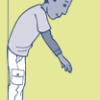
Throw Your Weight Around
Source Institutions
During this activity, learners take part in a variety of tasks which involve moving and balancing different body parts.
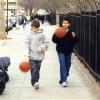
Mega Bounce
Source Institutions
In this outdoor activity (on page 2 of the PDF under GPS: Baseball Activity), learners will investigate the transfer of energy using sports equipment.

Batter Up!
Source Institutions
This activity (on page 3 of the PDF under GPS: Baseball Activity) is a full inquiry investigation into how "bounciness" relates to the distance a ball will fly when hit off a batting tee.
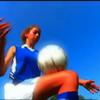
Super Bounce
Source Institutions
In this activity (on page 1 of the PDF under SciGirls Activity: Soccer Ball Kick), learners will investigate the transfer of energy using sports equipment.
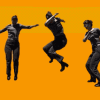
Mid-Air Maneuver: Skateboard Science
Source Institutions
To understand how skaters turn in midair, try this little experiment! Individuals can do this activity alone, but it works better with a partner.
Thrown For A Curve: Pitch Like A Big Leaguer
Source Institutions
You may have tried to throw a curveball or a slider, or even a screwball, with an ordinary baseball and found it difficult to do.
Finding the Sweet Spot
Source Institutions
In this activity, learners will discover how to find the "sweet spots" on a baseball bat. Whenever an object is struck, it vibrates in response.
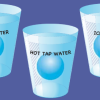
What Counts in Bounce
Source Institutions
In this activity learners compare the bounciness of warm and cold racquetballs to see if temperature makes a difference in how well they bounce.
Extra Bounce
Source Institutions
In this indoor or outdoor demonstration, use a large and small ball to illustrate conservation of energy and momentum.
Balance Challenge
Source Institutions
In this quick activity, learners take a balance challenge to measure their average balance time. As they collect data, they investigate how practice and repetition improve their balance time.
Sock It To Me
Source Institutions
In this activity, learners discover how sweating makes us feel cooler. Learners put on one damp sock and one dry sock and sit in front of a fan.
Do Sweat It!
Source Institutions
In this activity, learners explore why humans sweat. Learners compare the effects of heat on a balloon filled with air and a balloon filled water.
Bouncing Balls
Source Institutions
When baseball was in its infancy, the ball had plenty of bounce. Today's baseball may not seem to have bounce to it at all; if you drop a ball on the field it won't bounce back.

Pop Fly
Source Institutions
In this design challenge activity, learners invent a way to send a Ping-Pong ball flying high enough to catch it - like football with a twist!
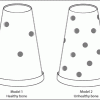
Space Stations: Bones of Contention
Source Institutions
In this activity, learners make models representing bones on Earth and bones that have been in space. They discover what happens to bones without proper exercise and nutrition.

Stethoscope
Source Institutions
Make a copy of the first stethoscope with only a cardboard tube! René Laennec invented the first stethoscope in 1819 using an actual paper tube!