
Search Results
Showing results 1 to 13 of 13
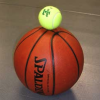
"Baseketball": A Physicist Party Trick
Source Institutions
This trick from Exploratorium physicist Paul Doherty lets you add together the bounces of two balls and send one ball flying.
Boomerang
Source Institutions
Everybody loves boomerangs! In this activity about force and motion, the learners will experiment with boomerangs and explore how they work. This is a great activity to get learners up and moving.
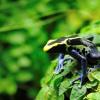
Frog Olympics
Source Institutions
Did you know that a bullfrog can jump a distance of 10 times its body length? Learn more about nature's most acrobatic amphibian, the frog, through this set of short, hands-on activities.

Work Up An Appetite
Source Institutions
In this activity, learners participate in fun movement activities while playing on a giant game board. Use this activity to get learners involved in physical activity.
Take It in Stride
Source Institutions
In this health and fitness activity, learners focus on the importance of daily physical activity, specifically walking.
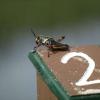
Jump Start
Source Institutions
In this movement and measurement activity, learners jump as far as they can three times, and compare their longest jump to the longest jump of their friends, classmates and/or family members.
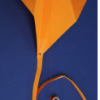
Kites
Source Institutions
In this engineering/design activity, learners make a kite, fly it, and then work to improve the design. Learners explore how their kite design variations affect flight.
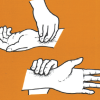
Cardiac Hill
Source Institutions
In this outdoor activity linking human health to the environment, learners use their pulse rates as a measure of the effort expended in walking on different slopes.

Statistics: Steppin' Out
Source Institutions
In this math lesson, learners construct box-and-whisker plots to analyze and compare data sets. Learners investigate whether or not long-legged people run faster than short-legged people.

Race for Survival
Source Institutions
During this interactive "survival" game, students learn about the importance of camouflage and how it helps animals to blend into their surroundings, as either predator or prey.

Active Graphs
Source Institutions
In this activity, learners track their movements with jumping and leaping graphs.
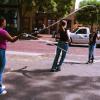
Twirling Rope Frequency
Source Institutions
In this activity (page 1 of the PDF under SciGirls Activity: Double Dutch), learners will stand twelve feet apart swinging a rope at the slowest tempo possible while someone uses a stopwatch to record
Good Stress
Source Institutions
In this activity about physical stress (page 28 of PDF), learners discover that muscles and bones need to work to stay strong.