
Search Results
Showing results 1 to 20 of 47

Bouncing Balloons
Source Institutions
In this sports-themed engineering activity, learners create super bouncy balls out of balloons. Learners brainstorm, test their designs, and share results.

Engineered Sports
Source Institutions
In this activity, learners explore the concept of how aerospace engineering has impacted sports, specifically exploring the design of golf balls.
Ball Bounce Experiment
Source Institutions
In this activity, learners investigate the properties of different types of balls.
Make Your Own Magnus Glider
Source Institutions
Build a glider that uses the same physics as a curve ball, for less than a dime.

Hit the Spot!
Source Institutions
This is a hands-on activity about the physics of tennis. Learners will discover that physics plays a big part in tennis, no matter what their skill level might be.
Throw Your Weight Around
Source Institutions
During this activity, learners take part in a variety of tasks which involve moving and balancing different body parts.
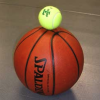
"Baseketball": A Physicist Party Trick
Source Institutions
This trick from Exploratorium physicist Paul Doherty lets you add together the bounces of two balls and send one ball flying.

Mega Bounce
Source Institutions
In this outdoor activity (on page 2 of the PDF under GPS: Baseball Activity), learners will investigate the transfer of energy using sports equipment.

Batter Up!
Source Institutions
This activity (on page 3 of the PDF under GPS: Baseball Activity) is a full inquiry investigation into how "bounciness" relates to the distance a ball will fly when hit off a batting tee.
Super Bounce
Source Institutions
In this activity (on page 1 of the PDF under SciGirls Activity: Soccer Ball Kick), learners will investigate the transfer of energy using sports equipment.
Push: Water Ski Over the Sharks
Source Institutions
This is an online activity about acceleration. Learners will choose a speed and an angle in order to help a water-skier named Fonzie use a ramp to clear a shark.

Mid-Air Maneuver: Skateboard Science
Source Institutions
To understand how skaters turn in midair, try this little experiment! Individuals can do this activity alone, but it works better with a partner.
Thrown For A Curve: Pitch Like A Big Leaguer
Source Institutions
You may have tried to throw a curveball or a slider, or even a screwball, with an ordinary baseball and found it difficult to do.
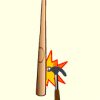
Finding the Sweet Spot
Source Institutions
In this activity, learners will discover how to find the "sweet spots" on a baseball bat. Whenever an object is struck, it vibrates in response.
Think Fast!: Just How Quick Are You?
Source Institutions
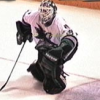
This is an activity about reaction times. Just how quickly must an NHL goalie respond to save a shot, and how does your reaction time compare?

Skateboard Disaster
Learners examine collisions between two skateboards carrying different masses. They learn about conservation of momentum in collisions.
What Counts in Bounce
Source Institutions
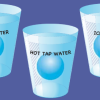
In this activity learners compare the bounciness of warm and cold racquetballs to see if temperature makes a difference in how well they bounce.
Extra Bounce
Source Institutions
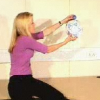
In this indoor or outdoor demonstration, use a large and small ball to illustrate conservation of energy and momentum.
Balance Challenge
Source Institutions
In this quick activity, learners take a balance challenge to measure their average balance time. As they collect data, they investigate how practice and repetition improve their balance time.
Sock It To Me
Source Institutions
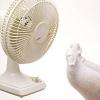
In this activity, learners discover how sweating makes us feel cooler. Learners put on one damp sock and one dry sock and sit in front of a fan.