
Search Results
Showing results 1 to 15 of 15
Throw Your Weight Around
Source Institutions
During this activity, learners take part in a variety of tasks which involve moving and balancing different body parts.
Balance Challenge
Source Institutions
In this quick activity, learners take a balance challenge to measure their average balance time. As they collect data, they investigate how practice and repetition improve their balance time.
Sock It To Me
Source Institutions
In this activity, learners discover how sweating makes us feel cooler. Learners put on one damp sock and one dry sock and sit in front of a fan.
Do Sweat It!
Source Institutions
In this activity, learners explore why humans sweat. Learners compare the effects of heat on a balloon filled with air and a balloon filled water.
Clothespin Workout
Source Institutions
This is a great activity about human energy production. Learners will work out with a clothespin to investigate why hockey players jump on a stationary bike after an intense game.
Space Stations: Bones of Contention
Source Institutions
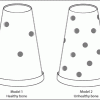
In this activity, learners make models representing bones on Earth and bones that have been in space. They discover what happens to bones without proper exercise and nutrition.
Stethoscope
Source Institutions
Make a copy of the first stethoscope with only a cardboard tube! René Laennec invented the first stethoscope in 1819 using an actual paper tube!
Space Stations: Follow the Bouncing Ball!
Source Institutions
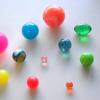
In this activity, learners predict whether a ball on Earth or a ball on the Moon bounces higher when dropped and why.

Pitch, Roll and Yaw: The Three Axes of Rotation
Source Institutions
In this activity (page 87 of the PDF), learners move their bodies to better understand the three axes of rotation: pitch, roll and yaw.
Slowing the Flow
Source Institutions
In this experiment, pairs of learners explore how cold water affects circulation. The mammalian diving reflex (MDR) slows circulation when the body is exposed to cold water.
Crunch Time
Source Institutions
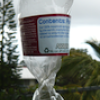
In this quick and easy activity and/or demonstration, learners use two empty 2-liter bottles and hot tap water to illustrate the effect of heat on pressure.
Mission: Control!
Source Institutions
In this activity and game, learners will train to improve balance and spatial awareness by performing throwing and catching techniques on one foot.
Crew Strength Training
Source Institutions
In this activity, learners will train to develop upper and lower body strength in their muscles and bones by performing body-weight squats and push-ups.
Do a Spacewalk!
Source Institutions
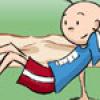
In this activity, learners train to increase muscular strength and improve upper and lower body coordination by performing the “bear crawl” and the "crab walk.” Learners perform the exercises over tim
Jump for the Moon
Source Institutions
In this activity, learners will train to increase bone strength and to improve heart and other muscle endurance by performing jump training with a rope, both while stationary and moving.