
Search Results
Showing results 21 to 40 of 51
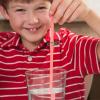
Clogged Arteries
Source Institutions
In this activity, learners explore how eating unhealthy food can damage a heart and arteries.
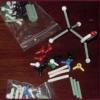
Molecular Menagerie
Source Institutions
In this activity, learners use molecular model kits to construct familiar molecules like lactose, caffeine, and Aspirin.

Be A Pasta Food Scientist
Source Institutions
In this activity, learners of all ages can become food scientists by experimenting with flour and water to make basic pasta.
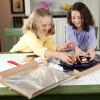
Cook with a Solar Oven
Source Institutions
In this activity, learners make their own solar oven to bake s'mores and learn about how solar energy is absorbed on Earth.
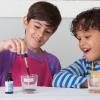
What Does Spit Do?
Source Institutions
Some animals can swallow food whole, but humans have to chew. In this activity, learners will investigate what saliva does chemically to food before we even swallow.

Starch Breakdown
Source Institutions
Learners use Benedict’s solution and heat to test for the presence of simple sugars in glucose, sucrose, starch, and starch combined with amylase.
Natural Indicators
Source Institutions
Learners combine different plant solutions -- made from fruits, vegetables, and flowers -- with equal amounts of vinegar (acid), water (neutral), and ammonia (base).
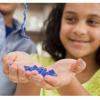
Exploring Fabrication: Gummy Capsules
Source Institutions
In this activity, learners make self-assembled polymer spheres.
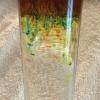
Fireworks in a Glass
Source Institutions
In this activity, learners use water, oil, and food coloring to observe a chemical reaction that creates a shower of colors inside of a glass.
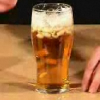
Lager Lamp
Source Institutions
In this demonstration, adult learners create a lava lamp using beer and nuts! Use this pub-themed activity to demonstrate the effects of buoyancy and bubbles.
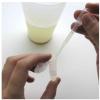
Exploring Structures: DNA
Source Institutions
In this activity, learners create a necklace of wheat germ DNA. Learners add alcohol to wheat germ so that the DNA clumps together.
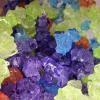
Edible Glass
Source Institutions
In this activity, learners discover the principles of edible glass by making a supersaturated sugar solution.
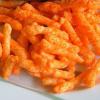
Crunch and Munch Lab
Source Institutions
In this activity, learners use three types of cheesy snacks--cheese balls, cheese puffs, and Cheetos--to learn about polymers.
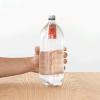
Condiment Diver
Source Institutions
In this hands-on activity, learners make the world's simplest Cartesian diver, using only a plastic bottle, some water, and a condiment packet.
Making An Impact!
Source Institutions
In this activity (on page 14 of PDF), learners use a pan full of flour and some rocks to create a moonscape.
Food Forensics: A Case of Mistaken Identity
Source Institutions
This lesson is designed to serve as an introduction to the immune system. It can stand alone or it can lead into further studies of the immune system.
Potato Power
Source Institutions
Learners combine hydrogen peroxide with three different forms of potato: raw chunks, ground chunks, and boiled chunks.
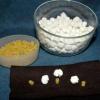
Nuclear Fusion
Source Institutions
This simple and engaging astronomy activity explains nuclear fusion and how radiation is generated by stars, using marshmallows as a model.
Gumdrop Chains and Shrinky Necklaces
Source Institutions
In this activity, learners thread gumdrops together to make a model of a polymer.