
Search Results
Showing results 321 to 340 of 2375
Rubber Blubber Gloves
Source Institutions
In this experiment, learners work in pairs to create two gloves -- one that contains a layer of shortening (blubber) inside, and one that doesn't.
Jiggly Jupiter
Source Institutions
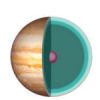
In this activity, learners build edible models of Jupiter and Earth to compare their sizes and illustrate the planets' internal layers.
Guar Gum Slime
Source Institutions
In this activity, learners create a gelatinous slime using guar gum powder and borax. Educators can use this simple activity to introduce learners to colloids.
Color by Numbers: Image Representation
Source Institutions
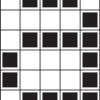
Computers store drawings, photographs, and other pictures using only numbers. Through this activity, learners decode numbers to create pictures using the same process that computers use.
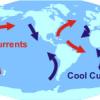
How it is Currently Done
Source Institutions
In this quick activity, learners observe how wind creates ocean currents.
Crushing Test
Source Institutions
In this activity, learners design a crushing test and discover that identifying and controlling the variables may be difficult.
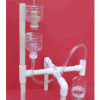
Toilet Model
Source Institutions
In this activity, PVC pipe, plastic water bottles and vinyl tubing are used to make a simple working toilet model. The model shows the role of a siphon in the flushing of a toilet.
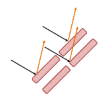
Liquid Crystals Interact with Light!
Source Institutions
In this two-part activity, learners explore the properties of liquid crystals, which are responsible for why mood rings change color.

Frijolitos
Source Institutions
Esta actividad enseña la proporción y razón por hacer que los aprendices hagan "ensaladas" que combinan tres tipos de frijoles en tres combinaciones diferentes.
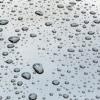
Atmospheric Collisions
Source Institutions
In this activity/demonstration, learners observe what happens when two ping pong balls are suspended in the air by a hair dryer. Use this activity to demonstrate how rain drops grow by coalescence.
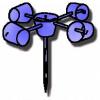
Catch the Wind
Source Institutions
In this weather activity (page 1 of the PDF), learners will construct their very own anemometer to measure wind speed.
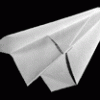
Paper Airplanes
Source Institutions
In this activity, learners explore the properties of paper by constructing and modifying paper airplanes.
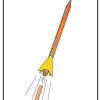
3...2...1 Puff!
Source Institutions
In this activity, learners build small indoor paper rockets, determine their flight stability, and launch them by blowing air through a drinking straw.
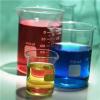
Red, White and Blue II Demonstration
Source Institutions
In this chemistry demonstration, learners investigate the rule "likes dissolve likes" by combining three, immiscible liquids to create a colorful density column.
Terrestrial Hi-Lo Hunt
Source Institutions
In this outdoor activity, learners search for the warmest and coolest, windiest and calmest, wettest and driest, and brightest and darkest spots in an area.
Searching for Life
Source Institutions
In this activity, learners discuss how life is defined and conduct a simple experiment, looking for signs of life in three different “soil” samples.
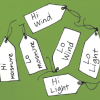
Sensory Hi-Lo Hunt
Source Institutions
In this outdoor activity, learners use only their senses to to find the extremes of several environmental variables or physical factors: wind, temperature, light, slope and moisture.
The Sharp Eyes of a Naturalist
Source Institutions
In this creative activity, learners will practice looking carefully to observe details and to become familiar with dioramas as a method for displaying naturalistic scenes.
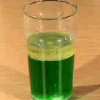
Erupting Fizz
Source Institutions
This is a highly visual demonstration that illustrates both the effects of density and chemical reactions.
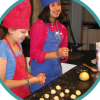
Cookie Surface Area
Source Institutions
This is an activity (on page 2 of the PDF under Surface Area Activity) about surface area to volume ratio.