
Search Results
Showing results 1 to 20 of 41
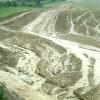
Identifying Erosion
Source Institutions
In this environmental science activity (page 3 of the PDF), leaners will identify and explain the causes of erosion.
Dunking the Planets
Source Institutions
In this demonstration, learners compare the relative sizes and masses of scale models of the planets as represented by fruits and other foods.
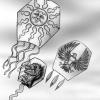
Sled Kite
Source Institutions
In this activity, learners build a sled kite that models a type of airfoil called a parawing.
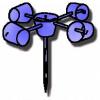
Catch the Wind
Source Institutions
In this weather activity (page 1 of the PDF), learners will construct their very own anemometer to measure wind speed.
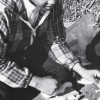
Food Grab
Source Institutions
In this outdoor activity, learners design devices that will catch prey or gather plants.
Up, Up and Away with Bottles
Source Institutions
In this activity, learners make water rockets to explore Newton's Third Law of Motion. Learners make the rockets out of plastic bottles and use a bicycle pump to pump them with air.

Germ Tag
Source Institutions
In this version of tag, a large group of learners model how the body fights infection. Learners act as germs, as lymphocytes, and as the body's cells threatened by germs.
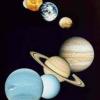
The Thousand-Yard Model
Source Institutions
This is a classic exercise for visualizing the scale of the Solar System.
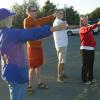
Does the Moon Rotate?
Source Institutions
This fun and simple hands-on astronomy activity lets learners make 3-dimensional models of the Earth and Moon.
Rocket Pinwheel
Source Institutions
This is an activity about motion, power, air and Newton’s Third Law of Motion, which states that for every action there is an equal and opposite reaction.
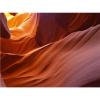
Erosion
Source Institutions
In this activity, learners model erosion using a clear shoebox and sand or soil.
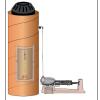
Rocket Wind Tunnel
Source Institutions
In this activity, learners evaluate the potential performance of air rockets placed inside a wind tunnel.
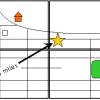
Solar System in My Neighborhood
Source Institutions
In this activity, learners shrink the scale of the vast solar system to the size of their neighborhood.
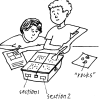
Pollen Tracks
Source Institutions
In this activity (on pages 30-36), learners simulate a dig for ancient pollen, to experience how paleobotanists study fossilized pollen in rocks to learn about early geological and climatological even

Pitch, Roll and Yaw: The Three Axes of Rotation
Source Institutions
In this activity (page 87 of the PDF), learners move their bodies to better understand the three axes of rotation: pitch, roll and yaw.
The Size and Distance of the Planets
Source Institutions
In this activity, learners investigate the concepts of relative size and distance by creating a basic model of the solar system.
Bird Feeders
Source Institutions
In this activity, learners build a bird feeder or feeders to attract birds for observation.
Snug as a Bug
Source Institutions
In this outdoor activity, learners make models of homes that might protect small animals from the elements, then search living plants for real structures made by small animals.
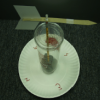
Design and Build a Wind Vane
Source Institutions
In this activity, learners design and build a simple wind vane —one of the oldest kinds of weather tools— and use it to show wind direction.
Bring it into Focus
Source Institutions
In this activity (page 2 of PDF), learners play with a lens and a piece of paper to focus an image on the paper. Learners look at different things, and see how the lenses affect the image.