
Search Results
Showing results 1 to 9 of 9

Disease Detective
Source Institutions
This activity (on pages 35-43) lets learners analyze a "herd of elk" to detect the spread of a bacterial disease called brucellosis.
Parasite Sleuth
Source Institutions
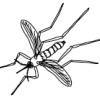
In this activity (on pages 26-33), learners play parasitologists, solving several "mysteries" about people who got sick from various parasites. In teams of four, each member solves one mystery.
Powdery Mildew Fungi: Classification and Ecology
Source Institutions
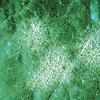
In this laboratory exercise, learners will discover how many different plant hosts they can find that are infected by the same genus of a powdery mildew fungus, or how many different genera of powdery
Disease Detectives
Source Institutions
In this activity, learners examine antibodies and antibody recognition using a model.
3D-ection: Molecular Shape Recognition
Source Institutions
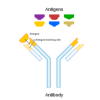
In this activity (page 12), learners explore how molecules self-assemble and how molecules must fit together, like a lock and key, in order to identify each other and initiate a new function as a comb
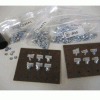
Macro-Microarray
Source Institutions
In this activity, learners explore the "nuts and bolts" of gene chips.
The Variety and Roles of Microbes
Source Institutions
In this activity, learners use sets of cards to assign microorganisms to different groups.

Outbreak!: Investigating Epidemics
Source Institutions
A group of learners simulates the spread of disease by trading slips of paper, one set of which has been treated with a baking soda solution.
3D-tection: Trying to Fit In
Source Institutions
In this activity, learners explore how molecules must fit together, like a lock and key, in order to identify each other and initiate a new function as a combined unit.