
Search Results
Showing results 21 to 40 of 56
Alike and Different
Source Institutions
This activity (on pages 7-13) has pairs of learners survey an array of similarities and differences between them.
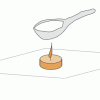
Finding the Carbon in Sugar
Source Institutions
In this activity about combustion and energy, learners observe a burning candle in a sealed jar and the burning of white sugar.

What Sort?
Source Institutions
In this activity (on pages 22-33), learners do the kind of work genetic scientists do, sorting and comparing (images of) genetic material strands called chromosomes.
Super Sleuths
Source Institutions
In this physical sciences activity, learners use science to solve a "crime." Learners collect trace evidence (glitter) and explore its characteristics, such as color, size, shape, and light reflection
Boats Afloat
Source Institutions
In this water activity, learners build boats that float and sink. First, learners listen to the book, "Who Sank the Boat" and practice making predictions throughout the story.

Lost Labels
Source Institutions
In this experiment, learners will conduct chemical and physical tests to identify mystery substances.
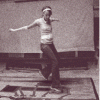
Dance Pad Mania
Source Institutions
Make your own "Dance Dance Revolution" dance pad! In this design challenge activity, learners work in teams to build a dance pad that lets you use your feet to sound a buzzer or flash a light.
No-Slip Grip
Source Institutions
In this physical sciences activity, learners explore friction. Learners investigate the factors that affect the force required to move an object.
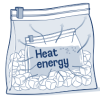
Ice Cream Shake
Source Institutions
In this tasty activity, learners make their own ice cream any day of the year in an exploration of heat and cold. Highlights include freezing and melting and the transition from liquid to solid.
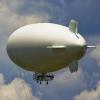
Sky Glider Challenge
Source Institutions
In this design challenge activity, learners use two helium-filled balloons to build a blimp that can travel in a straight path across the room.
A Recipe for Traits
Source Institutions
In this genetics activity, learners create and decode a “DNA recipe” for a dog by randomly selecting strips of paper that represent DNA.
Shower Estimation
Source Institutions
In this activity, learners calculate their water usage (in cups and galloons) during an average shower. Learners also chart and analyze water usage during showers in their households.
Whodunit?
Source Institutions
In this fascinating and fun experiment, learners use chemistry to identify a mystery powder and to solve a "crime," a process similar to that used by real forensic scientists.
Tempest in a Teacup
Source Institutions
In this hands-on activity, learners determine the types of chemical reactions achieved when combining different household products.
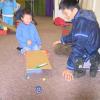
Exploring Ramps
Source Institutions
This guide features three related ramp explorations in which learners investigate the following science concepts: when placed on a ramp, some objects roll, others slide, and others stay put; the shape
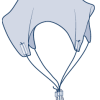
Sky Diver
Source Institutions
Students design and build their own parachutes in this hands-on engineering project.
Harmless Holder
Source Institutions
Have you noticed the plastic rings that are used to hold six-packs of soda? Those rings are great for carrying cans, but they're real trouble when they become trash that animals can get tangled in.
Multitasking Mania
Source Institutions
In this activity, learners conduct scientific research on multitasking. Learners determine if multitasking with media while doing homework affects their ability to successfully complete the homework.
Salting Out
Source Institutions
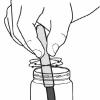
In this activity, learners create a mixture of water, alcohol and permanent marker ink, and then add salt to form a colored alcohol layer on top of a colorless water layer.
Kick Stick Challenge
Source Institutions
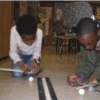
In this design challenge activity, learners investigate series circuits and motors to build a hand-held "kick stick." Their goal is create a battery-operated device that sends a Ping-Pong ball across