
Search Results
Showing results 81 to 97 of 97
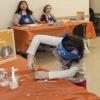
Rocket Reactions
Source Institutions
The "Rocket Reactions" activity is an exciting way to learn about how materials interact, behave, and change.
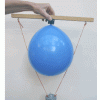
Springs and Stomachs
Source Institutions
In this demonstration, learners investigate mass, gravity, and acceleration by dropping a wooden bar with a balloon attached to its underside, a mass suspended from it by rubber bands, and a sharp-poi
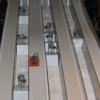
Echo Base Bobsleds
Source Institutions
The goal of this activity is to build a miniature bobsled that is either the fastest or the slowest. Learners use recycled materials to design, build, and test their bobsled on a bobsled track.
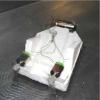
Airboat
Source Institutions
In this activity related to Newton's Laws of Motion, learners build a boat powered by a propeller in the air.
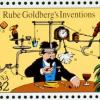
Homemade Rube Goldberg Machine
Source Institutions
In this fun and, at times, hilarious force and motion activity, learners will use household objects to build a crazy contraption and see how far they can get a tennis ball to move.
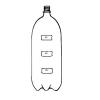
Under Pressure
Source Institutions
In this experiment, learners examine how pressure affects water flow. In small groups, learners work with water and a soda bottle, and then relate their findings to pressure in the deep ocean.
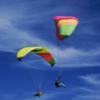
Playing with Parachutes
Source Institutions
In this activity, learners explore how parachutes are used to slow down moving objects. Learners work in teams of "engineers" to design and build their own parachutes out of everyday items.
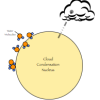
Do Cities Affect the Weather?
Source Institutions
In this activity, learners explore clouds and how they form.
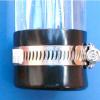
Free-Fall Bottles & Tubes
Source Institutions
In this physics activity, learners conduct two experiments to explore free-falling.
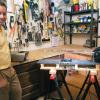
Model Wind Tunnel
Source Institutions
In this activity, learners build a miniature wind tunnel to measure force. Learners construct the model out of Lexan plastic, a fan, and a precise digital scale.
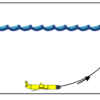
Exploring the Ocean with Robots
Source Institutions
In this activity, learners are introduced to robotic submarines called gliders. Learners make “gliders” from plastic syringes and compare these to Cartesian bottles and plastic bubbles.
Acid Rain
Source Institutions
In this chemistry demonstration, acid rain is simulated in a petri dish.
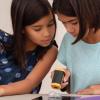
Exploring Earth: Temperature Mapping
Source Institutions
This activity models the way Landsat satellites use a thermal infrared sensor to measure land surface temperatures.
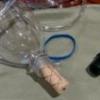
Water Rocket Launch
Source Institutions
In this activity, learners explore rocketry and the principals of space flight.
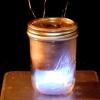
Jam Jar Jet
Source Institutions
In this activity, learners create a "Jam Jar Jet" based on Francois Reynst's discovery of a pulsejet engine, which uses one opening for both air intake and exhaust.
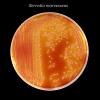
Demonstrating An Epidemic
Source Institutions
This experiment allows learners to experience a small scale "epidemic," demonstrating the ease with which disease organisms are spread, and enables learners to determine the originator of the "epidemi
Super Soil
Source Institutions
In this outdoor activity, learners make their own organic-rich soil. Depending on where this activity is done, learners will probably discover that their local soil is low in organic matter.