
Search Results
Showing results 1 to 20 of 26
Air Cannon
Source Institutions
In this activity, learners create air cannons out of everyday materials. Learners use their air cannons to investigate air as a force and air pressure.
Full of Hot Air: Hot Air Balloon Building
Source Institutions
In this activity, learners create a model of a hot air balloon using tissue paper and a hairdryer. Educators can use this activity to introduce learners to density and its role in why things float.
Wind Tube
Source Institutions
In this activity, learners explore moving air and the physics of lift and drag by constructing homemade wind tunnels.
Hot Air Balloon
Source Institutions
In this activity, learners build a hot air balloon using just a few sheets of tissue paper and a hair dryer.
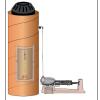
Rocket Wind Tunnel
Source Institutions
In this activity, learners evaluate the potential performance of air rockets placed inside a wind tunnel.
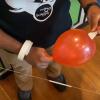
Balloon Rockets
Source Institutions
In this activity, learners will create a model rocket out of an inflated balloon attached to a straw on a taught string.
Rocket Pinwheel
Source Institutions
This is an activity about motion, power, air and Newton’s Third Law of Motion, which states that for every action there is an equal and opposite reaction.
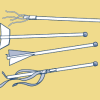
Blast Off!
Source Institutions
Students design and create their own air-powered rockets, in this hands-on activity.

Crazy About Kites
Source Institutions
In this activity, learners build a kite out of paper, change it, and try to make it fly even better. With their new knowledge of kite making, students can then go on to create their own kite designs.
Up, Up and Away with Bottles
Source Institutions
In this activity, learners make water rockets to explore Newton's Third Law of Motion. Learners make the rockets out of plastic bottles and use a bicycle pump to pump them with air.
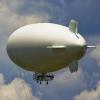
Sky Glider Challenge
Source Institutions
In this design challenge activity, learners use two helium-filled balloons to build a blimp that can travel in a straight path across the room.
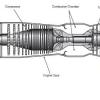
Jet Propulsion
Source Institutions
In this two-part activity, learners work in pairs to examine the four basic stages of a turbine engine.
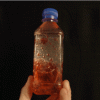
Why do Raindrops Sometimes Land Gently and Sometimes Land with a Splat?
Source Institutions
In this activity, learners examine raindrop bottles (prepared ahead of time) to observe in slow motion the behavior of falling droplets and explore concepts such as drag and terminal velocity.
Helicopter Twirl
Source Institutions
Learners cut and fold a paper helicopter from the template in this PDF. They practice twirling the helicopter and observe what happens as they modify their tries.
Nosedive
Source Institutions
This is a great activity for investigating the basics of lift and drag as they pertain to flight. Learners will discover how to avoid "taking a nosedive" by building their own paper airplane.
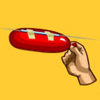
How Do Probes Get To Space?
Source Institutions
Investigate how force and thrust work to propel rockets into outer space. Build a rocket: a blown-up balloon taped to a drinking straw threaded through some string.
Rocket Reactions
Source Institutions
The "Rocket Reactions" activity is an exciting way to learn about how materials interact, behave, and change.
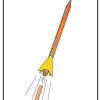
3...2...1 Puff!
Source Institutions
In this activity, learners build small indoor paper rockets, determine their flight stability, and launch them by blowing air through a drinking straw.
Airboat
Source Institutions
In this activity related to Newton's Laws of Motion, learners build a boat powered by a propeller in the air.
Wingin' It
Source Institutions
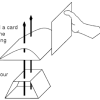
Learners explore the Bernoulli effect by building an airfoil (airplane wing) and making it fly.