
Search Results
Showing results 41 to 60 of 81
Going Buggy: Three Body Parts
Source Institutions
In this fun snack and craft activity, young learners make "Ants on a Log" and their own model of an insect. The purpose is to learn the three main insect body parts—head, thorax and abdomen.
Breakfast Proteins
Source Institutions
In this activity, learners construct a cereal chain as a model of how proteins are made in the cell.
Milk Makes Me Sick: Exploration of Lactose Intolerance
Source Institutions
Why does milk make some people sick? In this activity learners explore this question and explore the chemistry of milk, and our bodies!
Chomp
Source Institutions
In this activity (page 5 of pdf), learners explore the relationships between the shape and structure of a shark's teeth and the food it eats, and then create their own shark tooth from clay.
The Egg Activity
Source Institutions
Learners observe the outside and inside of raw chicken eggs, record descriptions, and hypothesize what will happen when a facilitator drops an egg on the floor.
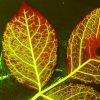
Lighting Up Celery Stalks
Source Institutions
In this activity, learners conduct a series of hands-on experiments that demonstrate how the working of plants' veins, known as capillary action, enables water to travel throughout the length of a pla
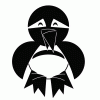
Fraction Penguin
Source Institutions
In this craft activity, learners will recognize, name, and compare the fractions 1/2, 1/4, and 1/8 by constructing a penguin out of portions of paper circles.
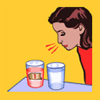
Shark Sense of Smell
Source Institutions
This is an activity about our sense of smell and how it compares to sharks' super noses. Learners will create varying solutions of water and perfume.
Get Moving! Active Play Indoors and Outdoors
Source Institutions
In this activity, learners explore the importance of active play.
This Bitter Be Good
Source Institutions
In this health and genetics activity, learners determine whether tasting the bitter compound PTC (phenylthiocarbamide) influences which vegetables a person likes.
Wrap It Up!
Source Institutions
In this Energy and Environment activity (page 9 of the PDF), learners calculate the mass of a piece of gum, compare it to the mass of the gum's packaging, and then create a bar graph of the results.
Yeast DNA Extraction
Source Institutions
This laboratory exercise is designed to show learners how DNA can easily be extracted from yeast using simple materials.
Wheat Germ DNA Extraction
Source Institutions
This laboratory exercise is designed to show learners how DNA can easily be extracted from wheat germ using simple materials.
Let's Make Molecules
Source Institutions
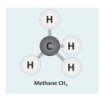
In this activity, learners use gumdrops and toothpicks to model the composition and molecular structure of three greenhouse gases: carbon dioxide (CO2), water vapor (H2O) and methane (CH4).
Onion DNA Extraction
Source Institutions
This laboratory exercise is designed to show learners how DNA can easily be extracted from onion cells using simple materials.
Exploring Fabrication: Gummy Capsules
Source Institutions
In this activity, learners make self-assembled polymer spheres.
Fungus Among Us
Source Institutions
In this environmental health activity, learners grow and observe bread mold and other kinds of common fungi over the course of 3-7 days.
Fossil Dig Site
Source Institutions
In this activity (located on page 5 of PDF), learners work in groups to create dig sites for display.
Inside DNA
Source Institutions
In this activity (on pages 34-39), learners make a fairly detailed model of DNA using licorice and gumdrops.
Protect That BRAIN!: Mr. Egghead
Source Institutions
This activity demonstrates the importance of wearing a helmet to protect the brain. An egg is used to symbolize a head with the shell as the skull and the inside of the egg as the brain.