
Search Results
Showing results 61 to 75 of 75
Find Someone: Use Math to Learn About Friends
Source Institutions
Create a “Find Someone” list, with about 10 items, each containing a shape, number, or measurement. Can you find someone in the group with hair about 4 inches long? Someone wearing parallel lines?
Salt 'n Lighter
Source Institutions
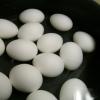
In this activity, learners discover that as the salinity of water increases, the density increases as well. Learners prove this by attempting to float fresh eggs in saltwater and freshwater.
Surface Area and Soda Geysers
Source Institutions
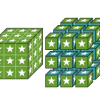
This is an activity (located on page 4 of the PDF under Surface Area Activity) about surface area and reactivity.
For the Birds: Environmental Effects on Population
Source Institutions
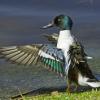
In this activity, learners will investigate how shorebirds and seabirds are extremely vulnerable to changes in their environment, whether human-induced or otherwise.
Mystery Jars: Estimate Contents
Source Institutions
This activity puts a mathematical twist on the familiar “guessing jar.” No guesses allowed, estimates only.
Breathing Room
Source Institutions
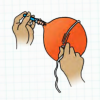
In this health activity, learners explore breathing, lungs and asthma. Learners test their lung capacity by blowing air into balloons.
How Big is Small
Source Institutions
In this classic hands-on activity, learners estimate the length of a molecule by floating a fatty acid (oleic acid) on water.
Make a Model of a Home Made From Shipping Containers
Source Institutions
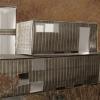
In this activity, learners watch a video to learn about a couple who built a home out of shipping containers in Brooklyn, New York.
Sea Turtle Populations
Source Institutions
In this activity (on page 2 of PDF under GPS: Sea Turtles Activity), learners will model how a sea turtle population changes over time, from eggs to adults, using puffed rice.
Is It Possible: Estimating Measurement
Source Institutions
In this activity, learners will decide together on a question about how far, long or high the group could reach together.
Beam Me Up!
Source Institutions
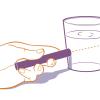
This is a quick activity (on page 2 of the PDF under Stained Glass Activity) about the "Tyndall effect," the scattering of visible light when it hits very small dispersed particles.
Fizzy Nano Challenge
Source Institutions
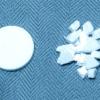
This lesson focuses on how materials behave differently as their surface area increases.
Transit Tracks
Source Institutions
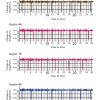
In this space science activity, learners explore transits and the conditions when a transit may be seen.
Catch a Wave: How Waves are Formed
Source Institutions
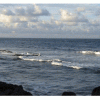
In this three-part activity, learners explore how waves are formed and why some waves are bigger than others. First, learners observe waves of water in a pan generated by an electric fan.

Building Tall
Source Institutions
In this engineering activity (page 2 of PDF), young learners investigate how a wide base can make a building more stable. Learners use blocks or boxes of different sizes to construct stable towers.