
Search Results
Showing results 1 to 20 of 26
Engineered Sports
Source Institutions
In this activity, learners explore the concept of how aerospace engineering has impacted sports, specifically exploring the design of golf balls.

Tennis Anyone?
Source Institutions
In this activity, learners explore sports engineering and advanced materials development.
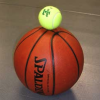
"Baseketball": A Physicist Party Trick
Source Institutions
This trick from Exploratorium physicist Paul Doherty lets you add together the bounces of two balls and send one ball flying.
Trophy Triathlon
Source Institutions
In this activity, learners are challenged to design and construct a trophy for prize-winning sports equipment.
Mid-Air Maneuver: Skateboard Science
Source Institutions
To understand how skaters turn in midair, try this little experiment! Individuals can do this activity alone, but it works better with a partner.
Thrown For A Curve: Pitch Like A Big Leaguer
Source Institutions
You may have tried to throw a curveball or a slider, or even a screwball, with an ordinary baseball and found it difficult to do.
Finding the Sweet Spot
Source Institutions
In this activity, learners will discover how to find the "sweet spots" on a baseball bat. Whenever an object is struck, it vibrates in response.
Think Fast!: Just How Quick Are You?
Source Institutions
This is an activity about reaction times. Just how quickly must an NHL goalie respond to save a shot, and how does your reaction time compare?

Skateboard Disaster
Learners examine collisions between two skateboards carrying different masses. They learn about conservation of momentum in collisions.
Extra Bounce
Source Institutions
In this indoor or outdoor demonstration, use a large and small ball to illustrate conservation of energy and momentum.
Bouncing Balls
Source Institutions
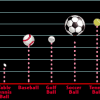
When baseball was in its infancy, the ball had plenty of bounce. Today's baseball may not seem to have bounce to it at all; if you drop a ball on the field it won't bounce back.
Clothespin Workout
Source Institutions
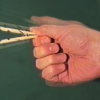
This is a great activity about human energy production. Learners will work out with a clothespin to investigate why hockey players jump on a stationary bike after an intense game.
Design a Safer Bicycle Helmet
Source Institutions
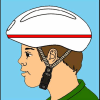
In this activity, learners design a bicycle helmet. Participants will explore the design of bicycle helmets to gain an appreciation for the role that helmet layers play protecting the head.
Sail Away
Source Institutions
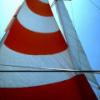
In this activity, learners explore watercraft engineering and sailing.
Parabola Basketball
Source Institutions
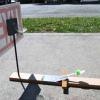
In this activity, learners build mini-basketball courts and explore the laws of physics. Learners discover that everything you throw or shoot on earth travels in a parabola.
Echo Base Bobsleds
Source Institutions
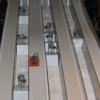
The goal of this activity is to build a miniature bobsled that is either the fastest or the slowest. Learners use recycled materials to design, build, and test their bobsled on a bobsled track.
Multi-Variable Relations: Stressed to the Breaking Point
Source Institutions
In this math lesson, learners explore the relationship between the thickness of a spaghetti bridge, the length of the bridge, and the amount of weight that can be supported by the bridge.

Pitch, Roll and Yaw: The Three Axes of Rotation
Source Institutions
In this activity (page 87 of the PDF), learners move their bodies to better understand the three axes of rotation: pitch, roll and yaw.

Slowing the Flow
Source Institutions
In this experiment, pairs of learners explore how cold water affects circulation. The mammalian diving reflex (MDR) slows circulation when the body is exposed to cold water.
Crunch Time
Source Institutions
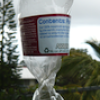
In this quick and easy activity and/or demonstration, learners use two empty 2-liter bottles and hot tap water to illustrate the effect of heat on pressure.