
Search Results
Showing results 1 to 20 of 65
Deer Me: A Predator/Prey Simulation
Source Institutions
In this activity, learners will simulate the interactions between a predator population of gray wolves and a prey population of deer in a forest.
Disease Detective
Source Institutions
This activity (on pages 35-43) lets learners analyze a "herd of elk" to detect the spread of a bacterial disease called brucellosis.
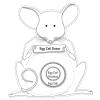
Let's Clone a Mouse, Mouse, Mouse...
Source Institutions
Somatic Cell Nuclear Transfer (SCNT) is a cloning method that involves transferring a nucleus from a somatic cell of the individual to be cloned to an enucleated egg.
Bean Bugs
Source Institutions
In this outdoor biology and math activity, learners estimate the size of a population of organisms too numerous to count.
Rumination
Source Institutions
In this activity (on pages 24-34), learners explore the four-part stomach of cows (and other grazing animals called ruminants), and compare it to the human one-part stomach and its digestive process.
Flocking for Food
Source Institutions
In this outdoor beach activity, learners use a variety of "beaks" (such as trowels, spoons or sticks) to hunt for organisms that shore birds might eat.
I Like to Move-It
Source Institutions
This is an activity which will allow learners to gain an understanding of lemur behavior through observation and role play.
Underwater ROV
Source Institutions
In this online Flash game, learners will explore a coral reef using an underwater remotely operated vehicle (ROV).

Shape Up!
Source Institutions
In this activity (25th on the page) about learning and memory, learners explore a training method that animal trainers employ called "shaping." Working in pairs, learners will attempt to "shape" each
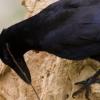
Grabbing a Bite to Eat
Source Institutions
In this activity, learners perform an experiment that replicates the dilemma faced by birds in acquiring food from a confined area.
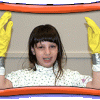
Rubber Blubber Gloves
Source Institutions
In this experiment, learners work in pairs to create two gloves -- one that contains a layer of shortening (blubber) inside, and one that doesn't.
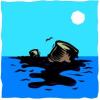
Oil Spill Cleanup
This hands-on experiment will provide learners with an understanding of the issues that surround environmental cleanup.
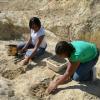
Shoebox Dinosaur Dig Site
Source Institutions
In this activity, (on page 6 of the PDF under SciGirls Activity: Dinosaurs) learners participate in a hands-on fossil excavation.
Food Grab
Source Institutions
In this outdoor activity, learners design devices that will catch prey or gather plants.
Variation Game
Source Institutions
In this set of outdoor games, learners play the role of monkeys that are trying to get enough resources (food, shelter, and space) to survive.
Close, Closer, Closest
Source Institutions
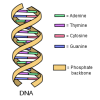
In this activity, learners perform an experiment that models a chromatography-like process called electrophoresis, a process used to analyze DNA.
Tracking Otters
Source Institutions
This activity (on pages 38-43) has learners simulate the way scientists track and map the movement of otters in the wild using radio trackers.
The Carbon Cycle: How It Works
Source Institutions
In this game, learners walk through an imaginary Carbon Cycle and explore the ways in which carbon is stored in reservoirs and the processes that transport the carbon atom from one location to another
OBIS Oil Spill
Source Institutions
In this outdoor activity, learners simulate an oil spill using popcorn (both oil and popcorn float on water), and estimate the spill's impact on the environment.
Partners in Pollination
Source Institutions
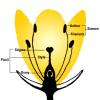
In this activity, learners identify the reproductive parts of plants and the animal (bee) structures involved in pollination.