
Search Results
Showing results 581 to 600 of 2930
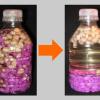
Infant Moon: Moon Mix!
Source Institutions
In this activity, learners investigate the Moon's infancy and model how an ocean of molten rock (magma) helped shape the Moon that we see today.
Echo Base Bobsleds
Source Institutions
The goal of this activity is to build a miniature bobsled that is either the fastest or the slowest. Learners use recycled materials to design, build, and test their bobsled on a bobsled track.
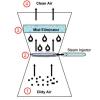
Washing Air
Learners observe and discuss a simple model of a wet scrubber, a device for cleaning industrial air pollution.
Colored Shadows Investigation
Source Institutions
This activity (located on page 3 of the PDF under GPS: Light and Color Activity) is a full inquiry investigation into mixing colors with light.
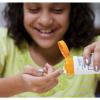
Invisible Sunblock
Source Institutions
In this activity, learners find out why some mineral sunblock rubs in clear. Learners compare nano and non-nano sunblocks and discover how particle size affects visibility.
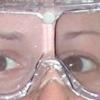
Altered Reality
Source Institutions
In this activity, learners discover that the human brain is highly adaptable. Learners try to toss beanbags at a target while wearing prism goggles.
Foam Tower
Source Institutions
In this activity (page 1 of the PDF under SciGirls Activity: Water Slides), learners will whip up some suds with a cup of water and a tablespoon of dish soap until the bubbles are stiff enough to star
Motion Madness: Choose the Winner
Source Institutions
This is an online game that explores speed, range and momentum. Learners will pick the winners in a 16-team tournament in 3 events: Tug-o-war, sprint, and marathon.
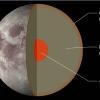
Recipe for a Moon
Source Institutions
In this activity, learners discover that the Moon, like Earth, is made up of layers of different materials. Learners work in teams to make models of the interiors of the Moon and Earth.
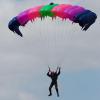
Blow-and-Go Parachute
Learners make a skydiver and parachute contraption and launch it. They see that the drag created by air resistance slows the descent of skydivers as they travel back to Earth.

Mind-Reading Magic
Source Institutions
In this activity, learners recreate a method of detecting and correcting errors in computers called 'parity'.
Stethoscope
Source Institutions
Make a copy of the first stethoscope with only a cardboard tube! René Laennec invented the first stethoscope in 1819 using an actual paper tube!

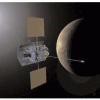
My Angle on Cooling: Effects of Distance and Inclination
Source Institutions
In this activity, learners discover that one way to cool an object in the presence of a heat source is to increase the distance from it or change the angle at which it is faced.
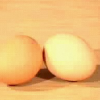
Egg-Citing Physics
Source Institutions
In this demonstration about momentum, use physics to distinguish between a hard-boiled egg and a raw egg without cracking them open.
Forms of Carbon
Source Institutions
In this activity, educators can demonstrate how the nanoscale arrangement of atoms dramatically impacts a material’s macroscale behavior.
Biodomes Engineering Design Project
In this design-based activity, learners explore environments, ecosystems, energy flow and organism interactions by creating a model biodome. Learners become engineers who create model ecosystems.

Pollinator Bath
Source Institutions
In this activity, learners will build a design and build a place for pollinators to drink from.
Amphibian Skin
Source Institutions
In this activity, learners explore the concept of permeability to better understand why amphibians are extremely sensitive to pollution.
Rate of Solution Demonstration
Source Institutions
In this chemistry demonstration, learners investigate the factors that increase the rate of dissolution for a solid.