
Search Results
Showing results 1 to 20 of 31

Formulas Poker
Source Institutions
In this adapted version of poker, learners practice writing chemical formulas by playing this chemistry card game.
Exploring the Universe: Space Guess Quest
Source Institutions
Space Guess Quest is a fun game that encourages participants to identify the many types of objects in space, from human-made spacecraft to nebulas, galaxies, stars, and worlds.

Motion Madness: Choose the Winner
Source Institutions
This is an online game that explores speed, range and momentum. Learners will pick the winners in a 16-team tournament in 3 events: Tug-o-war, sprint, and marathon.
Polyatomic Ion Bingo
Source Institutions
This activity was designed for blind learners, but all types of learners can play this game to learn about the major polyatomic ions (an ion that consists of two different elements).
Building Molecules
Source Institutions
This online interactive has three activities in the NanoLab (press the upper right button): Build, Zoom, and Transform.

The Carbon Cycle: How It Works
Source Institutions
In this game, learners walk through an imaginary Carbon Cycle and explore the ways in which carbon is stored in reservoirs and the processes that transport the carbon atom from one location to another
Cycles in the Cards
Source Institutions
In this "game," learners explore and relate the evolution of stars to a Navajo creation story. The story is written on a series of cards, which are laid on a table as the story is told.
Thrush Songs: An Interactive Game
Source Institutions
In this interactive game, learners listen to the songs of four different thrushes and then try to match each bird with its song.

The Carbon Cycle Game
Source Institutions
In this activity, learners take on the role of a carbon atom and record which reservoirs in the carbon cycle they visit.
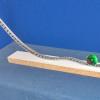
Over the Hill
Source Institutions
In this physics activity, learners construct a small-scale version of a classic carnival game.
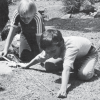
Cool It
Source Institutions
In this outdoor activity/game, learners use thermometers to simulate how lizards survive in habitats with extreme temperatures.
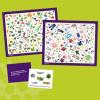
I Spy Nano!
Source Institutions
In this game, learners try to find nano-related objects on a game board. Learners investigate the different ways nano is in the world around us.

Stabilization Wedges Game
Source Institutions
This game introduces learners to the scale of the greenhouse gas problem, plus technologies that already exist to dramatically reduce our carbon emissions and prevent climate change.
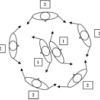
Exploring Fabrication: Self-Assembly
Source Institutions
In this activity, learners participate in several full-body interactive games to model the process of self-assembly in nature and nanotechnology.

Great Steamboat Race
Source Institutions
In this outdoor activity, learners race small boats, made of cork, balsa wood, popsicle sticks etc., to investigate the rate and direction of currents in a stream or creek.
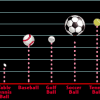
Bouncing Balls
Source Institutions
When baseball was in its infancy, the ball had plenty of bounce. Today's baseball may not seem to have bounce to it at all; if you drop a ball on the field it won't bounce back.
Exploring the Universe: Star Formation
Source Institutions
In this activity, participants will learn how stars form from the dust and gas that exists in space clumping together.
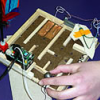
Marble Mazes
Source Institutions
In this activity, learners create a marble maze that contains sensors. As a metal marble triggers the sensors, the Pico Cricket turns on lights or spins motors.
Stem Cell Differentiation Game
Source Institutions
This game uses a modified Uno deck to review concepts related to stem cell research and diabetes.
A Universe Without Supernovae
Source Institutions
This fun and simple hands-on astronomy activity illustrates the value of supernovae in the universe.