
Search Results
Showing results 401 to 420 of 2375
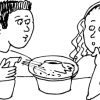
Vanishing Craters
Source Institutions
In this activity (on pages 12-15), learners make a crater model and test the effects of weather (rain) on its surface.
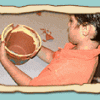
Piecing It All Together
Source Institutions
Learners create their own piece of history by decorating, shattering, and piecing together a flowerpot "artifact".
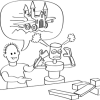
Programming Languages: Harold the Robot
Source Institutions
In this activity related to computer programming, learners give directions to a "robot" (either an adult or another learner) and find out which instructions the robot is able to follow, and how their
Yeast Balloons
Source Institutions
Visitors observe a bottle with a balloon attached around the mouth. The bottle contains a solution of yeast, sugar, and water.
Submarine: Lift Bag Lander
Source Institutions
In this activity (on page 4), learners create a submarine using a plastic sandwich bag. This is a fun way to learn about buoyancy and how captured gas can cause objects to float.
Exploring How Robots Move
Source Institutions
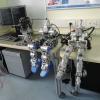
In this activity, learners explore how pneumatics and hydraulics could be used to produce movement in a robotic arm.
Cuatro en Línea
Source Institutions
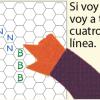
¡Este juego de estrategia tiene reglas sencillas pero puede ser un reto! Los jugadores empiezan con una red de hexágonos vacía. En su turno cada jugador pone su inicial en un hexágono vacío.

Black Magic (Color Chromatography)
Source Institutions
With a coffee filter, a black marker, and a cup of water, discover the secret colors hidden in black ink.
Testing Falling Peanut Butter Sandwich Myth
Source Institutions
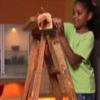
In this activity related to rotational inertia (page 1 of the PDF under SciGirls Activity: Microgravity), learners will use a bit of scientific experimenting to test if open-faced peanut butter sandwi
Double Dutch Distractions
Source Institutions
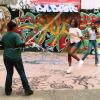
This activity (page 2 of the PDF under SciGirls Activity: Double Dutch) is a full inquiry investigation into whether hearing or seeing has a bigger effect on jump rope performance.
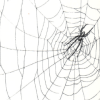
Web It!
Source Institutions
In this outdoor activity, learners investigate spider webs and feeding behavior, particularly how spiders trap food in their sticky silk webs while not getting stuck themselves.
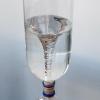
Vortex
Source Institutions
In this activity, learners create a tornado in a bottle to observe a spiraling, funnel-shaped vortex. A simple connector device allows water to drain from a 2-liter bottle into a second bottle.
Special Snack: Budgeting for Health
Source Institutions
In this activity, learners will plan a snack within a budget. With a $20 limit (theoretical) to spend on snack for everyone, learners look over grocery store circulars and make their shopping lists.
Mold Terrarium: What Grows on Leftover Food?
Source Institutions
This activity shows you how to make a mold terrarium using a jar and leftover food.
Hopper Circus
Source Institutions
In this outdoor activity and/or field trip, learners investigate the behavior of hopping animals.
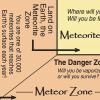
Space Rocks!: A Meteorite Game
Source Institutions
In this board game, learners explore the origins of meteors, meteoroids, and meteorites as well as the their characteristics and importance. They also discover some misconceptions about meteors.
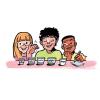
Neutralizing Acids and Bases
Source Institutions
Learners use their knowledge of color changes with red cabbage indicator to neutralize an acidic solution with a base and then neutralize a basic solution with an acid.
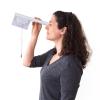
Height Sight
Source Institutions
In this activity, learners build a tool called an inclinometer that can find the height of any distant object, from a tree to the North Star.
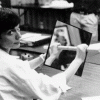
Mirrorly a Window
Source Institutions
In this activity about light and reflection, learners discover that what you see is often affected by what you expect to see.
Measure Yourself in Nanometers
Source Institutions
In this activity, learners will be able to measure themselves in nanometers. A nanometer is a billionth of a meter, a unit of measurement used in nanotechnology.