
Search Results
Showing results 1 to 20 of 20

Cat's Meow
Source Institutions
In this chemistry activity, learners are asked to form a hypothesis about the behavior of milk as household detergents act upon it.
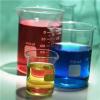
Red, White and Blue II Demonstration
Source Institutions
In this chemistry demonstration, learners investigate the rule "likes dissolve likes" by combining three, immiscible liquids to create a colorful density column.
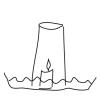
Thirsty Candle
Source Institutions
In this activity, learners will explore the dynamics of air pressure by using a candle, a cup, and a dish of water.
DNA Extraction: Look at your genes!
Source Institutions
Extract your DNA from your very own cells! First, learners swish salt water in their mouth to collect cheek cells and spit the water into a glass.

Anti-Gravity Cups
Source Institutions
In this activity, learners will use simple materials to explore centripetal force and variables by swinging a cup of water without having the water spill out.
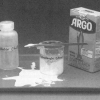
Starch Slime
Source Institutions
Learners mix liquid water with solid cornstarch. They investigate the slime produced, which has properties of both a solid and a liquid.
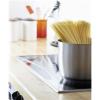
Dancing Spaghetti
Source Institutions
In this chemistry activity, learners use spaghetti to explore density and chemical reactions.
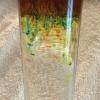
Fireworks in a Glass
Source Institutions
In this activity, learners use water, oil, and food coloring to observe a chemical reaction that creates a shower of colors inside of a glass.
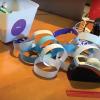
Paper Chain Testing
Source Institutions
Learners will do an experiment to determine which type of paper is strongest while focusing on variables and collecting data.
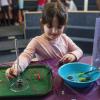
Build A Battery
Source Institutions
The Let's Do Chemistry "Build a Battery" activity lets participants learn how batteries work and how materials behave, change, and interact by building their own simple battery out of metal and felt w
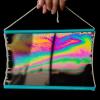
Cellular Soap Opera
Source Institutions
In this activity, learners create a large film of soap and experiment with what can and cannot pass through it.

Swirling Milk
Source Institutions
In this chemistry activity, learners prepare two petri dishes, one filled with water and one filled with milk.
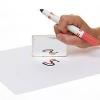
Mirror, Mirror
Source Institutions
In this activity, learners discover that it is difficult to trace a curve by using its reflection in a mirror. Use this activity to discuss how the brain works.
No Saliva, No Taste?
Source Institutions
In this activity (4th activity on the page), learners test to see if saliva is necessary for food to have taste.
Molecules in Motion
Source Institutions
"Molecules in Motion" explores how materials behave and change in a vacuum.
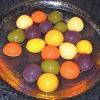
Jelly Beads
Source Institutions
Learners add drops of alginate solution to a solution of calcium chloride. The alginate does not mix with the calcium chloride, but forms soft gel beads.
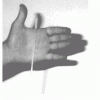
Holding Charge
Source Institutions
In this trick, learners discover how to stick a straw to the palm of their hand, window door, or anywhere using static electricity.
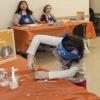
Rocket Reactions
Source Institutions
The "Rocket Reactions" activity is an exciting way to learn about how materials interact, behave, and change.
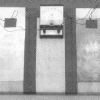
Human Battery
Source Institutions
Learners place their hands on different metals and use an ammeter to monitor the flow of electricity from one metal to another.
Sublimation Bubbles
Source Institutions
"Sublimation Bubbles" allows learners to explore how some solid materials, such as dry ice, can phase change directly from their solid to gaseous form.