
Search Results
Showing results 341 to 360 of 430
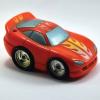
Puff Car
Source Institutions
In this activity, learners are challenged to design a wind-powered car using only a handful of household materials.
Bird Watching
Source Institutions
In this activity, learners will observe birds in their backyard or local park. They will attempt to find common Ohio birds and will look for bird behaviors just like an ornithologist.

Shake the Bag Ice Cream
Source Institutions
In this activity, learners will experiment with salt and ice in order to turn a bag of ingredients into ice cream.
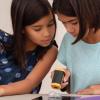
Exploring Earth: Temperature Mapping
Source Institutions
This activity models the way Landsat satellites use a thermal infrared sensor to measure land surface temperatures.
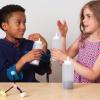
Chemistry Makes Scents
Source Institutions
In "Chemistry Makes Scents," participants use their noses to distinguish between chemicals with very similar structures.
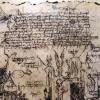
Pages of a Forbidden Tome
Source Institutions
In this activity, learners use chemistry to produce weathered "antiqued" paper with burned edges. Learners first soak white paper in coffee and then apply a charring solution of ammonium chloride.
Hail Storm House
Source Institutions
In this activity, learners construct hail-proof houses using recycled materials to discuss storm readiness and safety.
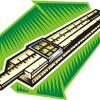
Slide Rules
Source Institutions
Learners make their own simple slide rules out of paper and learn how they work.
Ships Ahoy!
Source Institutions
Design a vessel that tests the limits of wind power given a set of off the shelf and recycled materials.
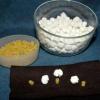
Nuclear Fusion
Source Institutions
This simple and engaging astronomy activity explains nuclear fusion and how radiation is generated by stars, using marshmallows as a model.
Gumdrop Chains and Shrinky Necklaces
Source Institutions
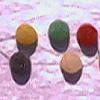
In this activity, learners thread gumdrops together to make a model of a polymer.
Chemistry Is Colorful
Source Institutions
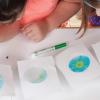
In "Chemistry is Colorful" learners explore different materials through paper chromatography.
Exploring Earth: Land Cover
Source Institutions
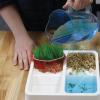
This activity models some of the ways natural processes, such as erosion and sediment pollution, affect Earth’s landscape.
Fish Wheels
Source Institutions
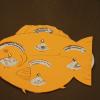
In this activity, learners cut out and assemble wheels to explore how variations in fish body structures (mouth shape/position/teeth, body shape, tail shape, and coloration patterns) allow fish to sur
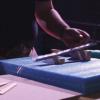
Chain Reaction II
Source Institutions
In this hands-on activity, learners use an assortment of (mainly household) items to complete Rube Goldberg-type challenges.
Dive into Design
Source Institutions
Based of the The Tech Challenge 2015, learners will engage in two mini-design challenges related to seismic engineering.
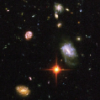
Telescopes as Time Machines
Source Institutions
This fun, nighttime hands-on astronomy activity lets learners explore how long it takes for light from different objects in the universe to reach Earth.
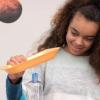
Exploring the Universe: Static Electricity
Source Institutions
This activity encourages visitors to build an electroscope—a simplified version of one of the tools scientists use to study the invisible forces on Earth and in space.
Magnus Glider
Source Institutions
A design challenge that takes paper airplanes into an entirely different direction: a magnus glider uses cups and and rubber bands to create a glider that uses the same forces that a curveball (from b
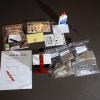
Sand Activity
Source Institutions
In this activity, learners observe mixtures of sand samples glued to note cards, and consider how sand can differ in size, shape, and color, and where it comes from.