
Search Results
Showing results 1 to 20 of 112
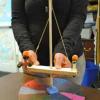
Carousel Pump
Source Institutions
In this activity, learners build a carousel toy that spins when pushed down.
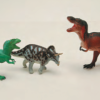
Join the Dinosaur Age
Source Institutions
In this activity, learners rotate through several learning and play stations to explore dinosaurs and paleontologists.
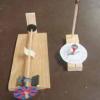
Magnetic Spinner & Compass
Source Institutions
Learners use shop tools and various materials to construct a magnetic spinner and a compass.
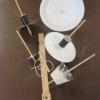
Tops
Source Institutions
In this activity, learners discover that some things only stand up while they are spinning.
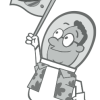
A Flag for Your Planet
Source Institutions
In this activity, learners design a flag for a chosen or assigned planet. The instructions include information about flags on Earth, and a list of flag references.
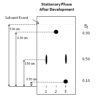
Chromatography Can Separate!
Source Institutions
In this chemistry activity, learners use thin layer chromatography to determine the molecular composition of different markers.
Box Ecology
Source Institutions
This great "re-use it" activity will demonstrate how to transform a greeting card into a box. Once constructed, the box can have many uses like holding special notes or keepsakes.
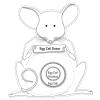
Let's Clone a Mouse, Mouse, Mouse...
Source Institutions
Somatic Cell Nuclear Transfer (SCNT) is a cloning method that involves transferring a nucleus from a somatic cell of the individual to be cloned to an enucleated egg.
Our Sense of Sight: Color Vision
Source Institutions
In this activity, learners investigate color vision as well as plan and conduct their own experiments.

Incredible Shrinking Shapes
Source Institutions
In this activity, learners get hands-on experience with ratios and scaling while making their own jewelry out of recycled plastic containers.
Iridescent Art
Source Institutions
This is a quick activity (on page 2 of the PDF under Butterfly Wings Activity) that illustrates how nanoscale structures, so small they're practically invisible, can produce visible/colorful effects.
What is Nanotechnology?
Source Institutions
In this activity related to nanotechnology, learners observe some of the effects that result from creating a thin layer of material several nanometers thick.
Pinhole Viewer
Source Institutions
In this activity, learners discuss and investigate how cameras, telescopes, and their own eyes use light in similar ways.
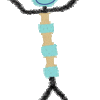
Space Stations: Sponge Spool Spine
Source Institutions
In this activity, learners simulate what happens to a human spine in space by making Sponge Spool Spines (alternating sponge pieces and spools threaded on a pipe cleaner).
Fossils: Observing, Making and Learning
Source Institutions
In this activity, learners explore how casts of fossilized bones are created and used to learn about dinosaurs. Learners make observations, draw diagrams and share their findings.
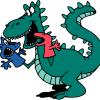
Dinosaur Sock Puppet
Source Institutions
In this activity about dinosaurs, learners first participate in a group discussion about where and when dinosaurs lived, how big they were, and who studies them and how.
Sunny Day Painting
Source Institutions
In this activity, learners explore properties of water and watch evaporation happen by "painting" with water in the sun.
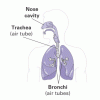
Heart and Lungs
Source Institutions
In this environmental health activity, learners investigate their breathing and pulse rates, and learn how these measurements are affected by physical activity.
Greeting Card Boxes
Source Institutions
In this activity, learners make cool boxes out of old (or new) greeting cards or postcards.
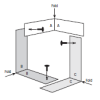
Building a 3-D Space Maze: Escher Staircase
Source Institutions
In this activity (page 95 of the PDF), learners create Escher Staircase models similar to those that were used by Neurolab's Spatial Orientation Team to investigate the processing of information about