
Search Results
Showing results 1 to 8 of 8
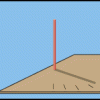
Where is the Sun?
Source Institutions
In this activity, learners verify that the Sun appears in a different location at a specific time every day of the year with one exception: on the Equinoxes.
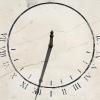
Portable Sundial
Source Institutions
Learners construct one or more of the following kinds of sundials: a shadow plot, a horizontal sundial, and a diptych sundial.
Light is Made of Colors
Source Institutions
Learners observe different light sources, outdoors and indoors, using prism glasses (diffraction glasses) and color filters.
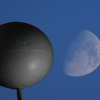
Why Does the Moon Have Phases?
Source Institutions
In this activity, learners use a simple 3D model to discover why the Moon has phases.
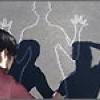
Changing Shadows
Source Institutions
In this sunny day, outdoor activity, learners observe changes in shadows over time. The activity also helps to develop a sense of the Earth's motion.
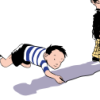
Shadow Play
Source Institutions
In this three part activity, learners explore and experiment with shadows to learn about the Sun's relative motion in the sky.
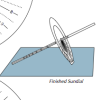
Equatorial Sundial
Source Institutions
In this activity, learners make an equatorial sundial, which is simple to construct and teaches fundamental astronomical concepts. Learners use the provided template and a straw to build the sundial.
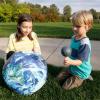
Exploring the Solar System: Solar Eclipse
Source Institutions
Exploring the Solar System: Solar Eclipse” is a hands-on activity demonstrating how the particular alignment of the Sun, Earth, and Moon can cause an eclipse.