
Search Results
Showing results 41 to 55 of 55
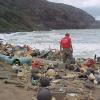
I Am/Who Has: A Litter Matching Game
Source Institutions
In this game, learners match descriptions of marine debris (shoes, batteries, paper towels, etc.) to images of these items.
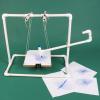
Drawing Board
Source Institutions
The Drawing Board consists of a marking pen that remains stationary and a platform that swings beneath the pen, acting as a pendulum.
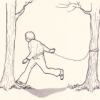
Tree Tally
Source Institutions
In this outdoor activity and fun race, learners first find the most common type of tree in a forest site.
The Awesome Game Race
Source Institutions
In this engineering activity, learners design their own board games.
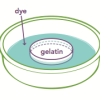
Traveling Nanoparticles Model
Source Institutions
This is an activity (located on page 3 of the PDF under Nanosilver Activity) about diffusion of small molecules across cell membranes.
Designer Seeds
Source Institutions
In this activity, learners will examine a variety of seeds, describe them, and determine how they are dispersed.
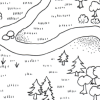
Mapping a Study Site
Source Institutions
In this outdoor activity, learners use a mapping technique to become oriented to the major features of an outdoor site.
Desert Water Keepers
Source Institutions
In this outdoor, sunny day activity, learners experiment with paper leaf models to discover how some desert plants conserve water.
Small Snails, Enormous Elephants
Source Institutions
This activity (located on page 2 of PDF) introduces learners to the real size of animals using nonstandard measurement.
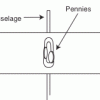
Lift Experiment
Source Institutions
In this experiment, learners investigate how the size of a wing affects lift. Learners count the number of pennies an egg crate plane wing can hold until the plane will no longer fly.
Invent an Animal
Source Institutions
In this outdoor activity and game, learners explore how animals adapt for survival through coloration, markings and camouflage.
Beginning Statistical Inquiries into the Scientific Method: Jelly-Side-Down
Source Institutions
This activity allows learners to explore the scientific method in an open-ended fashion, using the 4-P Approach to Science Inquiry developed by the University of Wisconsin, Beloit.
Race for Survival
Source Institutions
During this interactive "survival" game, students learn about the importance of camouflage and how it helps animals to blend into their surroundings, as either predator or prey.
Shadow Puppets
Source Institutions
In this activity, learners explore color, light and shadow by creating their own puppets to hold in front of a light source.
Rutherford's Enlarged: A Content-Embedded Activity to Teach about Nature of Science
Source Institutions
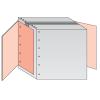
This paper describes a working-model demonstration of Ernest Rutherford's 1911 experiment about the nature of atoms.