
Search Results
Showing results 1161 to 1180 of 2481
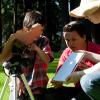
Spot the Sunspots
Source Institutions
In this activity, learners use binoculars (or a telescope) to identify and track sunspots. If using binoculars, learners need a pair that can be secured on a tripod.
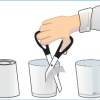
Cleaning Water with Dirt
Source Institutions
In this activity on page 7 of the PDF (Water in Our World), learners make their own water treatment systems for cleaning water.
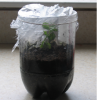
Small Habitats
Source Institutions
In this activity, learners build a model of a self-sustaining habitat (growing grass and beans from seeds).
Energetic Musical Instruments
Source Institutions
Learners design and create musical instruments from common objects; their challenge is to create an instrument that can make three different tones.
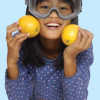
Testing Vitamin C: Chemistry's Clear Solution
Source Institutions
In this activity on page 8 of the PDF, learners investigate vitamin C. Learners conduct a chemistry experiment to determine if Tang drink mix or orange juice contains more vitamin C.
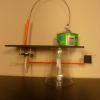
Sound Automata
Source Institutions
In this activity, learners build their own sound machines and explore the interplay of motion and sound.
Periodic Pegboard
Source Institutions
In this activity, learners use pegboard and straws to build a three-dimensional model of the periodic table.
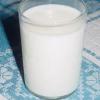
Magic Colored Milk
Source Institutions
In this chemistry activity (page 5 of the PDF), learners will use milk and a few other basic ingredients to create a chemical change to make a color wheel.
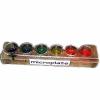
Forwards and Backwards
Source Institutions
In this activity, learners explore acids and bases by preparing six solutions that combine vinegar and ammonia, ranging from acid (all vinegar) to base (all ammonia).
Production of Hydrogen
Source Institutions
In this chemistry activity, learners use mossy zinc (or a galvanized nail) and hydrochloric acid to generate hydrogen gas and test some of its properties.
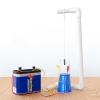
Curie Point
Source Institutions
In this activity best suited as a demonstration, learners observe that when a piece of iron gets too hot, it loses its ability to be magnetized.
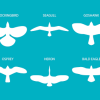
Control a Bird’s Flight
Source Institutions
In this engineering design challenge, learners make a bird and then control its flight with attached strings.

Fill 'er Up!
Source Institutions
Learners discover that their breath contains carbon dioxide, one of the pollutants found in car exhaust.
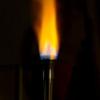
Combustion
Source Institutions
In this chemistry activity, learners discover that the weight of the product of combustion is greater than that of the starting material.
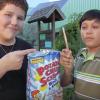
This Spud’s for You
Source Institutions
Use a homemade potato launcher to explore air pressure. This activity includes simple instructions on how to build a homemade propulsion pipe using pipe, a wooden dowel and duct tape.
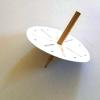
Make A Spinning Top
Source Institutions
In this activity, learners design and build a toy top out of simple, everyday materials and have the option to use the toy as an artistic tool.
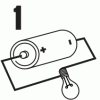
Circuit Sense
Source Institutions
In this activity about electricity, learners identify closed and open circuits. First, learners examine and label diagrams of open and closed circuits.
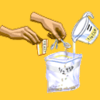
Breathing Yeasties
Source Institutions
Does yeast breathe? Find out by watching how plastic bags filled with yeast, warm water and different amounts of sugar change over time.
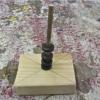
Magnet Tower
Source Institutions
In this activity, learners build magnetic towers to explore the forces and properties of magnets.
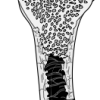
Round, Light and Hollow
Source Institutions
In this activity about bones (page 12 of PDF), learners investigate and compare the weight-bearing capacity of solid and hollow cylinders.