
Search Results
Showing results 1221 to 1240 of 2481
Invisible Investigations
Source Institutions
Using indirect observational methods, learners distinguish between charged and uncharged objects.
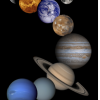
Habitable Worlds
Source Institutions
In this group activity, learners consider environmental conditions—temperature, presence of water, atmosphere, sunlight, and chemical composition—on planets and moons in our solar system to determine
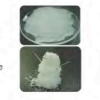
Special Effects Using Household Chemicals
Source Institutions
In this activity on page 4 of the PDF (Behind the Scenes with Chemistry), learners make some special effects, including snow and breaking glass, with supplies found in the home.
Dancing Cereal
Source Institutions
In this quick activity (on page 2 of the PDF under GPS: Body Electricity Activity), learners will observe how dry breakfast cereal appears to dance when it gets close to a balloon charged with static
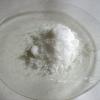
Making Sodium Acetate: Hot Ice
Source Institutions
In this chemistry activity which should only be done under adult supervision (page 10 of the PDF), learners will create an exothermic process by making Sodium Acetate.
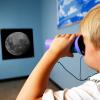
Exploring the Solar System: Hide and Seek Moon
Source Institutions
"Exploring the Solar System: Hide and Seek Moon" is an engaging way for early childhood learners to experiment with some of the tools scientists use to study objects that are very, very far away, and
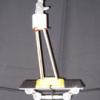
Ewok Escape
Source Institutions
The goal of this Star Wars activity is to design and build a balancing device to help an Ewok escape the Imperial Forces by sliding down a tightrope to safety.
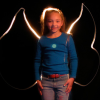
Light Painting
Source Institutions
Light painting is a creative activity that involves creating striking images and illusions using a camera, a light source, and a little practice.
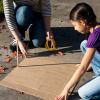
Ancient Sun Observations
Source Institutions
In this activity, learners make their own Sun tracker to explore how ancient civilizations around the world studied the Sun.
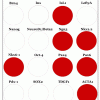
Microarrays and Stem Cells
Source Institutions
In this activity, learners use microarray technology to determine which genes are turned on and off at various points in the differentiation of pluripotent stem cells on their way to becoming pancreat
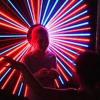
Benham’s Disk
Source Institutions
In this activity (on page 2 of the PDF under GPS: Light and Color Activity), learners will see the illusion of colors produced by a rotating black and white image known as Benham’s Disk.
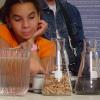
Super Soaking Materials
Source Institutions
In this activity, learners will test cups full of potting soil, sand, and sphagnum moss to see which earth material is able to soak up the most water.
Turbidity
Source Institutions
This is an activity about turbidity, or the amount of sediment suspended in water.
Vocal Visualizer
Source Institutions
With a bit of PVC, a laser, a can/cup, and a small mirror, you can make a device that visualizes you voice or any sound transmitted into the cup/can.
Exploring Ultraviolet (UV) light from the Sun
Source Institutions
In this outdoor activity, learners explore UV rays from the Sun and ways to protect against these potentially harmful rays.
Single Replacement Micro-Reactions
Source Institutions
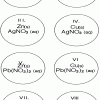
In this chemistry activity, learners use common chemicals and metals to explore single replacement reactions.
Hot Stuff!: Investigation #3
Learners test two jars of ice water, one covered and one open, for changes in temperature. After placing the jars in the sun, learners discover that the covered jar cools down more slowly.
Do Sweat It!
Source Institutions
In this activity, learners explore why humans sweat. Learners compare the effects of heat on a balloon filled with air and a balloon filled water.
Challenge: Microgravity
Source Institutions
In this activity about the circulatory system and space travel (on page 38 of the PDF), learners use water balloons to simulate the effects of gravity and microgravity on fluid distribution in the bod
Overnight Painting Machine: Pico Cricket Activity
Source Institutions
This activity requires a Pico Cricket (tiny computer).