
Search Results
Showing results 1981 to 2000 of 2164
Catch & Release II: It's Catching On!
Source Institutions
Throw that fish back? A new generation of ethical anglers concerned about conserving resources is participating in "catch and release" fishing. How is this going?
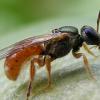
Giant Chromosomes: Fruit Fly DNA and You
Source Institutions
Many of the genetic sequences found in the fruit fly genome are similar to those found in humans.
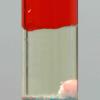
Five-Layer Density Column
Source Institutions
In this activity, learners can create five-layer density columns by employing one of three (or all) methods.
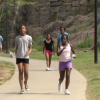
Workin' It Out
Source Institutions
In this activity, learners explore how to stay fit the fun way. Learners participate in three physical activities.
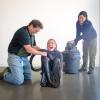
Feeling Pressured
Source Institutions
In this activity, learners (at least three) work together to explore the effects of atmospheric pressure.
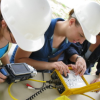
Robot Body Language
Source Institutions
In this robotics activity, learners find ways to express emotions and feelings using only body movements, not facial expressions.
Mix and Match
Source Institutions
In this optics activity, learners explore color by examining color dots through colored water and the light of a flashlight.
Five Second Dash
Source Institutions
This is an activity about prediction. How far can you hop in 5 seconds? Could you make it to the door? Across the room? Everyone lines up and tries it.
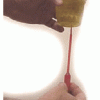
Single Serving Volcanism
Source Institutions
In this activity, learners eat a snack and make a model of the plumbing system of a volcano.
Fish Communities: National Marine Sanctuaries
Source Institutions
In this data activity, learners will compare and contrast fish communities, diversity and habitats in U.S. National Marine Sanctuaries.
Invent an Animal
Source Institutions
In this outdoor activity and game, learners explore how animals adapt for survival through coloration, markings and camouflage.
Beginning Statistical Inquiries into the Scientific Method: Jelly-Side-Down
Source Institutions
This activity allows learners to explore the scientific method in an open-ended fashion, using the 4-P Approach to Science Inquiry developed by the University of Wisconsin, Beloit.
The Bent Pencil
Source Institutions
In this optics activity, learners explore how light bends and affects what we see.

The Carbon Cycle and its Role in Climate Change: Activity 3
Source Institutions
In this activity, learners explore the human influences on the carbon cycle and examine how fossil fuels release carbon.
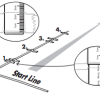
Stride Ruler
Source Institutions
In this activity, learners use their feet to estimate distances. Learners calculate the distance of one step in centimeters by measuring 10 steps at a time to reduce measurement error.
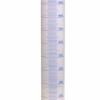
How Big is Small
Source Institutions
In this classic hands-on activity, learners estimate the length of a molecule by floating a fatty acid (oleic acid) on water.

Cup Speaker
Source Institutions
Make your own speaker with a magnet, wire, and paper cup! If you have a radio with a headphone plug and an old pair of headphones, this is a great tinkering activity.
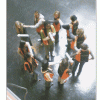
Running in Circles
Source Institutions
In this group activity, learners use some common objects and work together to simulate the Coriolis effect. During the challenge, learners make predictions and test different scenarios.
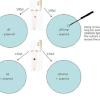
Transformation of E. coli Using Green Fluorescent Protein
Source Institutions
In this activity related to plant biotechnology, learners transform a strain of E. coli using green fluorescent protein from a bioluminescent jellies.
Leaf Me Alone
Source Institutions
In this activity, learners explore the structure of plant leaves. Learners find out what happens when they coat either the top or bottom sides of leaves with petroleum jelly.