
Search Results
Showing results 1841 to 1860 of 2164
Vanishing Rods
Source Institutions
This is a quick activity/demonstration that introduces learners to the concept of index of refraction. Learners place stirring rods in a jar of water and notice they can see them clearly.
Flower Powder
Source Institutions
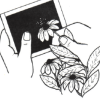
In this outdoor activity, learners use artificial bees and paper models of flowers to find out how bees transfer pollen from one flower to another.
Lagging Sound
Source Institutions
In this group activity, learners see and hear the speed of sound. A learner designated the "gonger" hits a gong, once every second, as the rest of the group watches and listens from a distance.
Big and Little Cups
Source Institutions
In this indoor or outdoor water activity, learners pour water from small cups to large cups and containers. In doing so, they discover water takes the shape of its container.
Twirling in the Breeze
Source Institutions
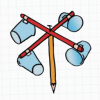
In this engineering activity, learners build a device (an anemometer) to measure how fast the wind is blowing.
Clean Water: Is It Drinkable?
Source Institutions
In this activity, learners simulate nature's water filtration system by devising a system that will filter out both visible and invisible pollutants from water.

Bouncy Egg
Source Institutions
In this activity, learners explore how acids can dissolve eggshells leaving behind a membrane-covered bouncy egg.
Temperature Time Warp
Source Institutions
In this activity, learners explore the behavior of cold-blooded animals. Learners discover what happens when they change a fly's temperature.
Crank It Up
Source Institutions
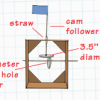
In this engineering activity, learners explore simple machines and then build cardboard automata using cams.
Hot Spot
Source Institutions
In this activity, learners explore the invisible infrared radiation from an electric heater.
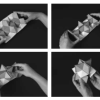
Exploring a Complex Space-Filling Shape
Source Institutions
In this activity, learners build a paper stellated rhombic dodecahedron, a three-dimensional 12-pointed star.
Chemical Change
Source Institutions
In this chemistry activity, learners explore the amount of copper in a new penny. Learners use toilet bowl cleaner to hollow out the interior of a penny with zinc inside.
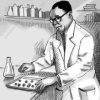
Forgotten Genius
Source Institutions
This series of chemistry stations is designed to accompany the PBS documentary about African-American chemist "Percy Julian: Forgotten Genius." Each of the six stations features either a chemical or p
Plant Parts and Their Diseases
Source Institutions
This exercise is designed to teach young learners the different parts of a plant (root, stems, leaves, flowers, fruit, and seeds), the basic functions of each part, and to show that tiny microscopic o
DNA Detective
Source Institutions
This activity is about collecting and analyzing DNA as part of a criminal investigation.
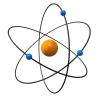
Scaling an Atom
Source Institutions
In this activity, learners make a scale model of an atom to see how big or how small an atom is compared to its nucleus. Learners will realize that most of matter is just empty space!
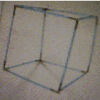
Ambiguous Cube
Source Institutions
In this activity, learners construct a three-dimensional ambiguous cube to explore visual illusions and how our brains interpret or misinterpret information.
Rocket Reactions
Source Institutions
The "Rocket Reactions" activity is an exciting way to learn about how materials interact, behave, and change.
Handwashing Laboratory Activities: Bowl Technique
Source Institutions
In this lab (Activity #2 on page), learners compare bacteria growth on two petri dishes containing nutrient agar. Learners touch the doors, faucets, etc.
Shell Shifts
Source Institutions
Ocean acidification is a big issue due to the amount of carbon dioxide humans release. CO2 in the atmosphere is absorbed into the ocean thus changing its acidity.