Search Results
Showing results 1 to 15 of 15
Heavy Air
Source Institutions
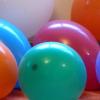
In this activity and/or demonstration, learners illustrate visually and physically that air has weight. Learners balance two equally-inflated balloons hanging from string on a yard stick.
Fun with Bernoulli
Learners conduct four simple experiments to demonstrate the effects of air pressure.

How can Clouds Help Keep the Air Warmer?
Source Institutions
In this activity, learners explore how air warms when it condenses water vapor or makes clouds.
Heat Capacity: Can't Take the Heat?
Source Institutions
Why is ocean water sometimes the warmest when the average daily air temperature starts to drop? In this activity, learners explore the differing heat capacities of water and air using real data.
Convection Demonstration
Source Institutions
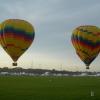
In this quick activity (located on page 2 of the PDF under GPS: Balloon Fiesta Activity), learners will see the effects of convection and understand what makes hot air balloons rise.

That Sinking Feeling
Source Institutions
In this quick activity, learners observe how salinity and temperature affect the density of water, to better understand the Great Ocean Conveyor.

Paper Drop Design Competition
Source Institutions
Using paper, paper clips, an index card, and tape, teams of learners design flying devices to (1) stay in the air as long as possible and (2) land as close as possible to a given target.
Squeeze the Stream
Source Institutions
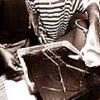
In this activity related to flight, learners build a tiny stream channel to investigate how fluids (air and water) change speed as they flow between and around objects.
Why do Raindrops Sometimes Land Gently and Sometimes Land with a Splat?
Source Institutions
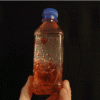
In this activity, learners examine raindrop bottles (prepared ahead of time) to observe in slow motion the behavior of falling droplets and explore concepts such as drag and terminal velocity.
Fungus Among Us
Source Institutions
In this environmental health activity, learners grow and observe bread mold and other kinds of common fungi over the course of 3-7 days.
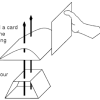
Wingin' It
Source Institutions
Learners explore the Bernoulli effect by building an airfoil (airplane wing) and making it fly.
Gravity Fountains
Source Institutions
This activity (located on page 3 of the PDF under GPS: Glaciers Activity) is a full inquiry investigation into the forces of gravity and air pressure.
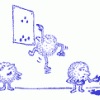
Look Mom, No Wings!
Source Institutions
In this activity about flight, learners explore how high they can jump. Learners dip their finger in ink or dirt, then jump as high as they can and mark paper attached to the wall.

Bernoulli Brain Teasers
Source Institutions
In this activity related to flight, learners conduct two simple tests to explore how lift works.