
Search Results
Showing results 201 to 220 of 224
Comparing the Amount of Acid in Different Solutions
Source Institutions
In this activity, learners use detergent solution to compare two solutions containing vinegar and cream of tartar.
Touch Down
Source Institutions
In this design challenge activity, learners build a shock-absorbing system that will protect two “astronauts” when they land.
Cabbage Juice Indicator: Test the pH of household products
Source Institutions
Learners make their own acid-base indicator from red cabbage. They use this indicator to test substances around the house.
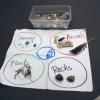
Beach Buckets
Source Institutions
In this activity, learners explore a bucket of sand and beach objects.
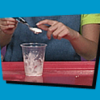
ZOOM Glue
Source Institutions
In this activity, learners mix milk, vinegar, baking soda, and water to create sticky glue. Use this activity to explain how engineers develop and evaluate new materials and products.
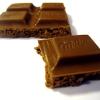
Melts in Your Bag, Not in Your Hand
Source Institutions
In this activity, learners use chocolate to explore how the Sun transfers heat to the Earth through radiation.
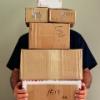
Shipping for Survival
Source Institutions
In this activity, learners explore how packaging engineers develop customized shipping and packaging containers to meet the needs of many different industries.
Curious Crystals
Source Institutions
Learners carefully look at four known household crystals.
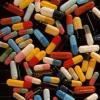
Gelatin Used for Drug Delivery
Source Institutions
In this activity, learners discover how gelatin can be used as a medium for drug delivery. Learners create colored gelatin and then cut out pieces of the gelatin to simulate medicine (pills).
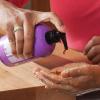
Wash Away Germs
Source Institutions
Many germs spread by our hands, and often times, people don't wash their hands well enough to get rid of germs.
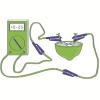
Make Your Own Batteries!
Source Institutions
This activity (on page 3 of the PDF under GPS: Body Electricity Activity) is a full inquiry investigation into conductivity.
Leaf Living
Source Institutions
In this outdoor fall activity, learners find out what living in or under a layer of leaves is like.
Keep it Cool
Source Institutions
In this activity, learners explore how engineers have met the challenge of keeping foods, liquids, and other items cool.

A Funny Taste
Source Institutions
In this activity, learners explore the different salinities of various sources of water by taste-testing.
Pea Brain!: Explorations in Estimation
Source Institutions
In this activity, learners use two different techniques to estimate how many little things fit into one bigger thing.
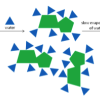
Chemistry in the Kitchen
Source Institutions
In this kitchen chemistry activity, learners explore the chemistry of crystals by making sugar crystals, consider a common chemical reaction type responsible for the rising of muffins and cake in the
Milli's Insulation Investigation
Source Institutions
In this activity on page 2 of the PDF, learners test different materials to find out which is the best insulator.

Avogadro's Bubbly Adventure
Source Institutions
In this activity on page 7 of the PDF, learners investigate the solubility of gas in water at different temperatures. This experiment will help learners determine if temperature affects solubility.
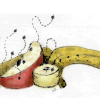
Fruit Fly Trap
Source Institutions
Build a fruit fly trap out of a 2-liter plastic bottle and some rotten fruit! Fruit flies are easy to catch in warm weather. Once you catch some, you will be able to see their life cycle up-close.
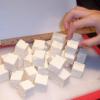
Exploring at the Nanoscale
Source Institutions
This lesson focuses on how nanotechnology has impacted our society and how engineers have learned to explore the world at the nanoscale.