
Search Results
Showing results 1 to 17 of 17
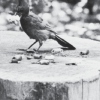
Jay Play
Source Institutions
In this outdoor activity, learners find out the color of food that jays prefer and then try to change the birds' preference by altering the taste of the food with salt.
Animal Scent
Source Institutions
This activity (on page 3 of the PDF under GPS: Animal Scent Activity) is a full inquiry investigation into animal behavior.

Frog Eggs
Source Institutions
In this activity, learners compare frog eggs to chicken eggs to better understand why frog eggs need water. Learners compare a boiled chicken egg to "frog eggs" represented by boiled tapioca.
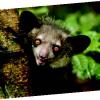
Aye-Aye
Source Institutions
This is an activity about the adaptations that allow the Aye-aye to survive in its habitat. Learners will explore how the Aye-aye collects food and how this is influenced by their specialized finger.
Air-filled (Pneumatic) Bone Experiments
Source Institutions
Just like birds, some dinosaurs had air-filled (pneumatic) bones, which made the dinosaurs' skeletons lighter.
Close, Closer, Closest
Source Institutions
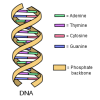
In this activity, learners perform an experiment that models a chromatography-like process called electrophoresis, a process used to analyze DNA.
Dinosaur Bone Experiments
Source Institutions
This activity features two connected hands-on activities about dinosaur bones.
Amphibian Skin
Source Institutions
In this activity, learners explore the concept of permeability to better understand why amphibians are extremely sensitive to pollution.
Gummy Growth
Source Institutions
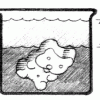
In this activity related to Archimedes' Principle, learners use water displacement to compare the volume of an expanded gummy bear with a gummy bear in its original condition.
Thymus DNA Extractions
Source Institutions
This laboratory exercise is designed to show learners how DNA can be extracted from a chunk of thymus (sweetbread) or liver.
Salt Water Revival
Source Institutions
In this outdoor activity, learners visit the intertidal zone of a rocky coastal site well populated with marine organisms.
Bone Identification
Source Institutions
This activity (page 3 of the PDF under SciGirls Activity: Dinosaurs) is a full inquiry investigation into fossil hunting and identification.

Avogadro's Bubbly Adventure
Source Institutions
In this activity on page 7 of the PDF, learners investigate the solubility of gas in water at different temperatures. This experiment will help learners determine if temperature affects solubility.
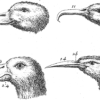
Bird Beak Buffet
Source Institutions
In this classic activity, learners investigate natural selection by becoming birds foraging for food on an island.
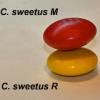
Survival of the Fittest: Variations in the Clam Species Clamys sweetus
Source Institutions
This guided inquiry three-part activity engages learners in thinking about the mechanism of natural selection by encouraging them to formulate questions that can be answered through scientific investi
Survival of the Fittest: Battling Beetles
Source Institutions
This guided inquiry three-part activity engages learners in thinking about the mechanism of natural selection through data collection and pattern recognition.

Corals on Acid
Source Institutions
The objective of this inquiry-based lesson is for learners to gain an understanding of how increasing ocean acidity can affect the calcification of marine organisms.