
Search Results
Showing results 261 to 280 of 320
Chemical Identification
Source Institutions
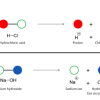
In this activity, learners discover how a cabbage juice indicator helps identify acids and bases, and how iodine indicates the presence of starch.
Does Your Chewing Gum Lose Its Flavor?
Source Institutions
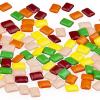
Each learner chews a piece of gum until it loses its flavor, and then leaves the gum to dry for several days.
Spaghetti Strength
Source Institutions
In this activity on page 7 of the PDF, learners explore how engineers characterize building materials.
Sugar Crystal Challenge
Source Institutions
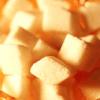
This lesson focuses on surface area and how the shape of sugar crystals may differ as they are grown from sugars of different coarseness.
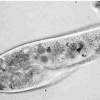
Observing Different Microbes
Source Institutions
In this activity, learners use a microscope to examine three different microbes: bacteria, yeast and paramecia. Educator will need to prepare the yeast solution one day before the activity.
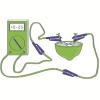
Make Your Own Batteries!
Source Institutions
This activity (on page 3 of the PDF under GPS: Body Electricity Activity) is a full inquiry investigation into conductivity.

Soggy Science, Shaken Beans
Source Institutions
Learners explore soybeans, soak them in water to remove their coat, and then split them open to look inside. They also make a musical shaker out of paper cups, a cardboard tube, and soybeans.

Potion Commotion
Source Institutions
In this hands-on science experiment, students combine their understanding of the different states of matter and the characteristics of various chemical reactions.
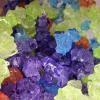
Edible Glass
Source Institutions
In this activity, learners discover the principles of edible glass by making a supersaturated sugar solution.
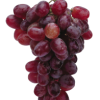
Explore Like a Scientist: Fruity Observations
Source Institutions
In this activity, learners use their senses to collect information about a fruit and record their findings in a Science Journal.
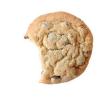
“Chips” Off the Old Block?
Source Institutions
In this activity, learners bake cookies by following different recipes to better understand genetic mutations. Everyone in the group bakes the same type of cookie: chocolate chip.
Diffusion & Osmosis with Data Analysis
Source Institutions
This three-part lab helps learners understand the essential principles governing diffusion and osmosis.
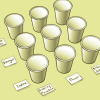
Whodunit?
Source Institutions
In this fascinating and fun experiment, learners use chemistry to identify a mystery powder and to solve a "crime," a process similar to that used by real forensic scientists.
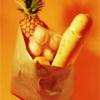
Design and Build a Better Candy Bag
Source Institutions
In this activity, learners explore how product design differences can affect the success of a final product -- in this case a bag for holding candy.
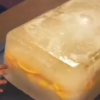
Frozen Fruit
Source Institutions
In this "Sid the Science Kid" activity from Episode 108: My Ice Pops, learners observe reversible change while thinking about ways to make ice melt.
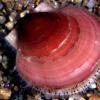
The Scoop on Scallops
Source Institutions
In this data analysis activity, learners quantify the abundance and distribution of sea scallops in and adjacent to the Mid-Atlantic closed areas.
Beginning Statistical Inquiries into the Scientific Method: Jelly-Side-Down
Source Institutions
This activity allows learners to explore the scientific method in an open-ended fashion, using the 4-P Approach to Science Inquiry developed by the University of Wisconsin, Beloit.
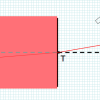
Super Gelatin
Source Institutions
Can gelatin (like Jell-O ®) change the speed of light?

A Funny Taste
Source Institutions
In this activity, learners explore the different salinities of various sources of water by taste-testing.
Pea Brain!: Explorations in Estimation
Source Institutions
In this activity, learners use two different techniques to estimate how many little things fit into one bigger thing.