
Search Results
Showing results 1 to 20 of 23
Sock Garden
Source Institutions
In this activity (located in the middle of the page), learners start a garden by planting their socks!
Find Out How Plants Use Water
Source Institutions
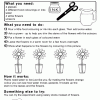
In this activity, learners investigate how plants use water. By making the flowers change color, learners see how water moves up the stem to the leaves and the flowers.
Do Plants Need Sunlight?
Source Institutions
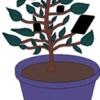
In this activity, learners find out what happens when they cover leaves with pieces of black construction paper. This activity shows learners that plants need sunlight to survive.
Photosynthesis and Transpiration
Source Institutions
In this activity on page 7 of the PDF (Plants—The Green Machines), learners examine the effects that light and air have on green plants.
Geothermal Power Plant Model
Source Institutions
In this activity, learners make a model of a power plant that uses steam. Learners use simple materials like foil, a tin can, and a pot of water to model a geothermal power plant.
Tree-mendous Plots
Source Institutions
In this math lesson, learners record and graph plant growth and interpret data. Learners plant seeds, and once the seeds sprout, record the change in height of the plants for several days.
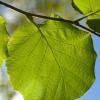
Leaf Me Alone
Source Institutions
In this activity, learners explore the structure of plant leaves. Learners find out what happens when they coat either the top or bottom sides of leaves with petroleum jelly.
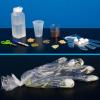
Grow a Garden in a Glove
Source Institutions
Learners use a transparent plastic glove as a container to grow seeds. A different kind of seed can be planted in each finger.
Paper Chromatography with Leaves
Source Institutions
In this activity on page 5 of the PDF (Plants—The Green Machines), learners use chromatography to separate and identify pigments within various leaves.
Creating a Soil Map
Source Institutions
In this activity, learners investigate soil conditions by creating a soil map. Learners record soil characteristics and compare the conditions of soil in different grid sections.
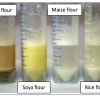
Wheat Evolution: Sedimentation Testing
Source Institutions
In this activity (Page 30 of PDF), learners investigate the evolution of wheat by conducting sedimentation tests on different flours.
Animal & Plant Cell Slides
Source Institutions
In this activity, learners make slides of onion cells and their own cheek cells. Use this lab to teach learners how to prepare microscope slides and use a microscope.
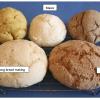
Wheat Evolution: Dough Rising and Baking
Source Institutions
In this activity (Page 25 of PDF), learners investigate the evolution of wheat by creating dough from different flours, observing the samples of dough as they rise, and then baking the dough.
Leaf it to Me
Source Institutions
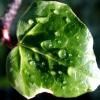
In this activity, learners observe the effect of transpiration as water is moved from the ground to the atmosphere.
Make a Terrarium
Source Institutions
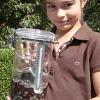
In this activity, learners make a miniature greenhouse or "terrarium" to explore the greenhouse effect.
Color-Changing Carnations
Source Institutions
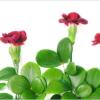
Learners place cut flowers in colored water and observe how the flowers change. The flowers absorb the water through the stem and leaves.
Water "Digs" It!
Source Institutions
In this activity, learners investigate soil erosion. Learners set up a simulation to observe how water can change the land and move nutrients from one place to another.
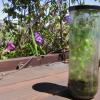
The Self-Watering Terrarium
Source Institutions
In this biology/ecology activity, learners construct a terrarium out of a tennis ball container. This terrarium is unique because it never has to be watered.
Soil Secrets
Source Institutions
In this activity (located at the bottom of the page), learners investigate soil and explore the creatures that live in it.
Mold Terrarium: What Grows on Leftover Food?
Source Institutions
This activity shows you how to make a mold terrarium using a jar and leftover food.