
Search Results
Showing results 1 to 20 of 35
Engineered Sports
Source Institutions
In this activity, learners explore the concept of how aerospace engineering has impacted sports, specifically exploring the design of golf balls.
Ball Bounce Experiment
Source Institutions
In this activity, learners investigate the properties of different types of balls.

Hockey Stick Power!
Source Institutions
This activity (on page 2 of the PDF under SciGirls Activity: Hockey) is a full inquiry investigation into how a hockey stick’s flex affects shooting power and accuracy.

Batter Up!
Source Institutions
This activity (on page 3 of the PDF under GPS: Baseball Activity) is a full inquiry investigation into how "bounciness" relates to the distance a ball will fly when hit off a batting tee.
Neural Network Signals
Source Institutions
In this activity, learners create an electrical circuit and investigate how some dissolved substances conduct electricity.
Super Bounce
Source Institutions
In this activity (on page 1 of the PDF under SciGirls Activity: Soccer Ball Kick), learners will investigate the transfer of energy using sports equipment.
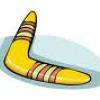
Boomerang
Source Institutions
Everybody loves boomerangs! In this activity about force and motion, the learners will experiment with boomerangs and explore how they work. This is a great activity to get learners up and moving.
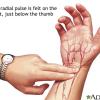
The Pulse of Gravity
Source Institutions
In this astronomy activity (page 3 of the PDF), learners will examine the effects of gravity on a person’s pulse and explore how gravity can differ from planet to planet.
Think Fast!: Just How Quick Are You?
Source Institutions
This is an activity about reaction times. Just how quickly must an NHL goalie respond to save a shot, and how does your reaction time compare?

Skateboard Disaster
Learners examine collisions between two skateboards carrying different masses. They learn about conservation of momentum in collisions.
What Counts in Bounce
Source Institutions
In this activity learners compare the bounciness of warm and cold racquetballs to see if temperature makes a difference in how well they bounce.

Take It in Stride
Source Institutions
In this health and fitness activity, learners focus on the importance of daily physical activity, specifically walking.
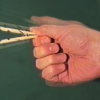
Clothespin Workout
Source Institutions
This is a great activity about human energy production. Learners will work out with a clothespin to investigate why hockey players jump on a stationary bike after an intense game.
Stepping Out: Hop, Skip, Jump
Source Institutions
In this activity, learners explore and experiment how we can use our bodies everyday to get from one place to another.
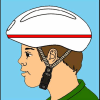
Design a Safer Bicycle Helmet
Source Institutions
In this activity, learners design a bicycle helmet. Participants will explore the design of bicycle helmets to gain an appreciation for the role that helmet layers play protecting the head.
Workin' It Out
Source Institutions
In this activity, learners explore how to stay fit the fun way. Learners participate in three physical activities.
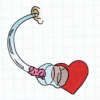
Heart to Heart
Source Institutions
In this activity, learners compare ways to measure their heart rates. Learners build their own stethoscopes and learn how exercise affects heart rate.
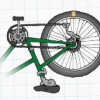
Pedal Power
Source Institutions
In this engineering activity, learners examine bicycle mechanics and gear ratios. Learners determine which gears will help them bike a set course in the shortest amount of time.
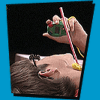
Drinking Straw Pulse Measurer
Source Institutions
In this health activity, learners create a device so that they not only feel their heartbeat, but also see it, using a straw and some clay.
Multi-Variable Relations: Stressed to the Breaking Point
Source Institutions
In this math lesson, learners explore the relationship between the thickness of a spaghetti bridge, the length of the bridge, and the amount of weight that can be supported by the bridge.