
Search Results
Showing results 21 to 40 of 59

Skateboard Disaster
Learners examine collisions between two skateboards carrying different masses. They learn about conservation of momentum in collisions.

Inertia
Source Institutions
In this physics activity (page 8 of the PDF), learners will explore the concept of inertia by attempting to run and stop quickly.
What Counts in Bounce
Source Institutions
In this activity learners compare the bounciness of warm and cold racquetballs to see if temperature makes a difference in how well they bounce.
Extra Bounce
Source Institutions
In this indoor or outdoor demonstration, use a large and small ball to illustrate conservation of energy and momentum.
Balance Challenge
Source Institutions
In this quick activity, learners take a balance challenge to measure their average balance time. As they collect data, they investigate how practice and repetition improve their balance time.
Bouncing Balls
Source Institutions
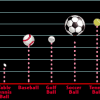
When baseball was in its infancy, the ball had plenty of bounce. Today's baseball may not seem to have bounce to it at all; if you drop a ball on the field it won't bounce back.

Pop Fly
Source Institutions
In this design challenge activity, learners invent a way to send a Ping-Pong ball flying high enough to catch it - like football with a twist!
Space Stations: Bones of Contention
Source Institutions
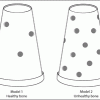
In this activity, learners make models representing bones on Earth and bones that have been in space. They discover what happens to bones without proper exercise and nutrition.
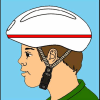
Design a Safer Bicycle Helmet
Source Institutions
In this activity, learners design a bicycle helmet. Participants will explore the design of bicycle helmets to gain an appreciation for the role that helmet layers play protecting the head.
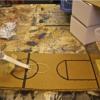
Finger Basketball
Source Institutions
In this activity, learners build mini-basketball courts using cardboard and measuring spoons. Use this activity to introduce learners to catapults, forces, and levers.
Sail Away
Source Institutions
In this activity, learners explore watercraft engineering and sailing.
Relative Speed of Dinosaurs
Source Institutions
In this activity, learners interpret three trackways and use measurements and a formula to infer the relative speed of dinosaurs.
Kites
Source Institutions
In this engineering/design activity, learners make a kite, fly it, and then work to improve the design. Learners explore how their kite design variations affect flight.
Parabola Basketball
Source Institutions
In this activity, learners build mini-basketball courts and explore the laws of physics. Learners discover that everything you throw or shoot on earth travels in a parabola.
Pedal Power
Source Institutions
In this engineering activity, learners examine bicycle mechanics and gear ratios. Learners determine which gears will help them bike a set course in the shortest amount of time.
Space Stations: Follow the Bouncing Ball!
Source Institutions
In this activity, learners predict whether a ball on Earth or a ball on the Moon bounces higher when dropped and why.
Echo Base Bobsleds
Source Institutions
The goal of this activity is to build a miniature bobsled that is either the fastest or the slowest. Learners use recycled materials to design, build, and test their bobsled on a bobsled track.
Space Stations: Beans in Space
Source Institutions
In this activity, learners perform 20 arm curls with cans that simulate the weight of beans on Earth versus the weights of the same number of beans on the Moon and in space.

Pitch, Roll and Yaw: The Three Axes of Rotation
Source Institutions
In this activity (page 87 of the PDF), learners move their bodies to better understand the three axes of rotation: pitch, roll and yaw.
Cup Sailing Game
Source Institutions
In this online Flash game, learners will captain a sailing challenge, adjusting boat direction and sails, seeking the way to take greatest advantage of varying wind speeds and directions to catch the