
Search Results
Showing results 881 to 900 of 1372
Pipeline Challenge
Source Institutions
In this activity, learners explore how engineers develop pipeline systems to transport oil, water, gas, and other materials over very long distances.
Stability of Egg White Foams
Source Institutions
In this chemistry meets cooking activity, learners compare the stability of egg white foams with various additives.
Rubber Band Racers
Source Institutions
In this activity, learners explore the design of rubber band powered cars. Learners work in teams of "engineers" to design and build their own rubber band cars out of everyday items.
Coral and Chemistry
Source Institutions
In this experiment, learners will explore whether increased carbon dioxide makes our oceans more basic or more acidic.
Conversation Piece
Source Institutions
Focus sound through a balloon! In this Exploratorium activity, you'll use dry ice to create a balloon that's a sound lens.
Slimy Cells
Source Institutions
In this activity, learners solidify their conceptualization of cells by building a model of a cell in a ziplock bag.
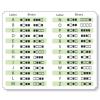
Binary Code Bracelets
Source Institutions
In this activity, learners make their own binary code bracelets by translating their initials into 0s and 1s represented by beads of 2 different colors.
Making An Impact!
Source Institutions
In this activity (on page 14 of PDF), learners use a pan full of flour and some rocks to create a moonscape.
The Best Dam Simulation Ever
Source Institutions
This online simulation game explores the different consequences of water levels on the Columbia River in the Pacific Northwest.
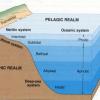
Introduction to Ocean Zones
Source Institutions
In this activity, learners will create a diagram of the ocean zones and determine what organisms live in each zone.
Properties of Dust
Source Institutions
In this activity, learners carry out a scientific investigation of dust in their classroom. Learners produce an analysis on graph paper of the dust they collect over the course of a few days.

Got Gas?
Source Institutions
Create gas with a glass of water, some wire, conductors and a battery! You will be separating water (H2O) into oxygen and hydrogen.
Water Fountain
Source Institutions
In this activity, learners explore how a hydraulic pump works. Learners work in teams to design and build a unique water fountain that employs a hydraulic pump.

Tennis Anyone?
Source Institutions
In this activity, learners explore sports engineering and advanced materials development.
Globe at Night
Source Institutions
In this international citizen science activity, learners measure their night sky brightness and submit their observations into an online database.
EEEEK--A Mouse!
Source Institutions
In this activity, learners explore the concept of how engineering solved the problem of human/computer interface.
Simple Spinner
Source Institutions
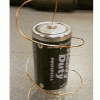
In this activity, learners create a tiny electric, motorized dancer. Learners use the interactions of magnetism and electric current to make a wire spin, while displaying the Lorentz Force in action.
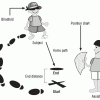
Find Your Way Around Without Visual or Sound Cues
Source Institutions
In this activity, learners play a series of simple games to investigate navigation without visual and sound cues.
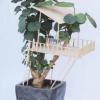
Mini Tree House Build
Source Institutions
In this activity, learners are challenged to design and build a miniature tree house in a potted plant. This activity uses engineering concepts to encourage creativity.
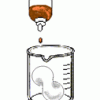
Foam Peanuts
Source Institutions
Learners compare the properties and solubilities of Styrofoam (TM), ecofoam packing peanuts, and popcorn. First, the solubility of each substance is tested in water.