
Search Results
Showing results 2301 to 2320 of 2375
Cardio Comparisons
Source Institutions
In this activity, learners discover how their heart rate changes in different situations.
Edible Ink
Source Institutions
In this chemistry activity (page 6 of the PDF), learners observe a chemical change. Learners write and reveal a secret message using edible ink.
How Sweet It Is
Source Institutions
In this activity (4th activity on the page), learners use their sense of smell to rate and arrange containers filled with different dilutions of a scent (like cologne or fruit juice) in order from wea
Heavy Metal
Source Institutions
In this activity (on pages 25-31 of PDF), learners soak sponges with different amounts of plaster of paris to simulate different levels of calcification in bone formation.
Shrinking Cups
Source Institutions
This is a quick activity (on page 2 of the PDF under Gecko Feet Activity) about the forces of gravity and surface tension and how their behavior is influenced by size.
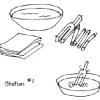
Good Vibrations
Source Institutions
This lesson (on pages 15-24 of PDF) explores how sound is caused by vibrating objects. It explains that we hear by feeling vibrations passing through the air.
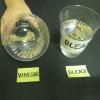
Bone Basics
Source Institutions
This is an activity (on page 2 of the PDF under Bone Regrowth Activity) about the two main components of bone - collagen and minerals (like calcium) - and how they each contribute to its flexibility a
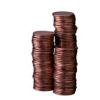
A Penny Saved is a Penny Heard
Source Institutions
In this activity (11th activity on the page), learners use pennies to test their hearing acuity.
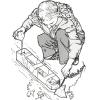
Hold It
Source Institutions
In this outdoor activity/field trip, learners investigate the special shapes, holding structures and holding behaviors that real organisms use in streams, rivers, creeks or coast intertidal zones to a
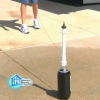
Number of Mentos vs. Height: Soda Geyser Series #5
Source Institutions
In this activity, learners conduct a controlled experiment to examine how many Mentos are needed to make the tallest possible soda geyser.
Drop IT!: Depth Perception
Source Institutions
These two activities (4th on the page) demonstrate the importance of two eyes in judging depth.
Ready to Observe: Enhance Your Telescope Experience
Source Institutions
This fun hands-on astronomy activity uses a variety of simple props to help learners understand why they see what they see in a telescope.
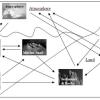
Carbon Cycle Roleplay
Source Institutions
In this creative roleplay activity, learners will explore the various processes of the carbon cycle using movement and props to aid in comprehension.
Seeing in the Dark
Source Institutions
In this activity (17th on the page), learners investigate why you cannot see colors in dim light.
Accommodating Accommodation
Source Institutions
In this demonstration (18th on the page), learners conduct a simple test to explore how the cornea refracts light, which is further bent by the eye lens through a process known as accommodation.
Make a Comet Model and Eat It!
Source Institutions
In this activity, learners build models of comets, using edible materials, to learn about comets' structure.
Shifting Backgrounds, Shifting Images
Source Institutions
In this quick activity/demonstration (5th on the page), learners explore depth perception.
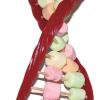
Have Your DNA and Eat It Too
Source Institutions
In this activity, learners build edible models of DNA, while learning basic DNA structure and the rules of base pairing.
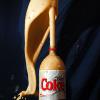
Soda Brand vs. Height Experiment: Soda Geyser Series #4
Source Institutions
In this activity, learners conduct a controlled experiment to examine which brand of soda makes the best (highest) soda geyser.
Hunger Signals
Source Institutions
This game explores the different reasons we choose to eat, and helps us be aware of when our body needs food and when it does not.