
Search Results
Showing results 781 to 800 of 2375
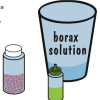
Glitter Slime
Source Institutions
Our bodies defend themselves in many different ways to prevent us from getting sick.
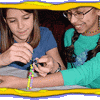
Wear a Chimp on Your Wrist
Source Institutions
Learners construct a bracelet containing two strands of beads, which represents a double strand of DNA that codes for a gene. They match beads to the bases in a section of a chimp's DNA code.
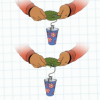
Breaking Point
Source Institutions
In this activity, learners build penetrometers to test leaf toughness. Biologists measure leaf toughness to study the feeding preferences of insects and bugs.
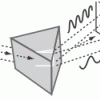
Rainbow in the Room
Source Institutions
This activity generates learner excitement about light through the creation of a room-sized rainbow.
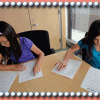
Read With Your Fingers
Source Institutions
In this activity, learners work in partners to create and exchange messages written in Braille. Learners use a Braille key and thumbtacks to write their messages in Braille.
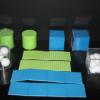
Volume, Mass, and Density Boxes
Source Institutions
This activity was designed for blind learners, but all types of learners can utilize it to investigate volume, mass, and density.

Exploring Symbiosis
Source Institutions
In this activity, learners discover which plants and animals have symbiotic relationships and how this impacts each organism.
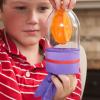
Build a Lung
Source Institutions
Most of the time, we don't have to think about breathing. In fact, you're probably breathing right now without thinking about it!
Eggs at Rest Stay at Rest
Source Institutions
This is an activity about inertia, Newton's First Law of Motion. Learners will discover how an egg at rest, or any object at rest, stays that way.
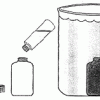
Make Your Own Deep-Sea Vent
Source Institutions
In this activity, learners make a model of the hot water of a deep sea vent in the cold water of the ocean to learn about one of the ocean's most amazing and bizarre underwater habitats.
Using Color to See How Liquids Combine
Source Institutions
Learners add different liquids (water, salt water, alcohol, and detergent solution) to water and observe the different ways the different liquids combine with water.
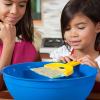
Snotty Nose
Source Institutions
Our bodies produce snot, or mucus, that we blow from our noses. In this activity, learners will create a model of how snot works and will explore how it keeps our bodies healthy.
Let's Go Ice Fishing
Source Institutions
In this activity, learners are challenged to lift a floating ice cube out of a glass of water using just one end of a piece of string.

Super Shrinkers
Source Institutions
In this activity on page 14 of the PDF (Rethinking the 3 R’s: It’s Easy to be Green), learners turn plain pieces of recycled plastic into shrunken works of art.
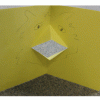
Simple Pop-Up Mechanisms
Source Institutions
In this activity, learners construct three quick and simple mechanisms to start building a pop-up book. Learners fold, cut, and glue paper to make a bird beak, parallelogram, and V-fold.
Wind Tunnel
Source Institutions
Scientists use enormous wind tunnels to test the design of planes, helicopters, even the Space Shuttle.
Spaghetti Strength
Source Institutions
In this activity on page 7 of the PDF, learners explore how engineers characterize building materials.

Nature Journals
Source Institutions
In this activity, learners construct a home-made journal with simple, everyday materials.
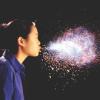
No It's Snot
Source Institutions
In this health activity (on page 3 of the PDF), learners will learn about the body‘s defenses against invasion from tiny particles.
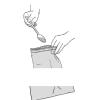
Matter of Degree
Source Institutions
In two separate bags, learners mix water with Epsom salts and detergent.