
Search Results
Showing results 1681 to 1700 of 2375
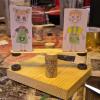
Magnetic Seesaw
Source Institutions
In this activity, learners build a seesaw powered by magnets.
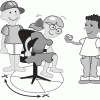
Vestibular-Ocular Reflex
Source Institutions
In this activity, learners will perform various investigations to understand the vestibular-ocular reflex and learn about the importance of visual cues in maintaining balance.
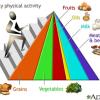
In Proportion
Source Institutions
Through this nutrition activity (page 5 of the PDF), learners will understand—and probably be surprised by—how big serving sizes of various foods should be.

Make Pooter
Source Institutions
In this activity, learners will explore engineering to construct an insect collecting tool (insect aspirator). The pooter uses suction to safely collect smaller insects that nets miss or may injure.

Avogadro's Bubbly Adventure
Source Institutions
In this activity on page 7 of the PDF, learners investigate the solubility of gas in water at different temperatures. This experiment will help learners determine if temperature affects solubility.
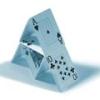
Critical Load
Source Institutions
In this activity, learners explore the concepts of structural engineering and how to measure the critical load, or the maximum weight a structure can bear.
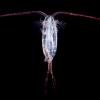
Plankton Feeding
Source Institutions
This activity provides a hands-on experience with a scale model, a relatively high viscosity fluid, and feeding behaviors.
Hanford at the Half-Life Radiation Calculator
Source Institutions
This quiz lets you estimate your annual radiation exposure.
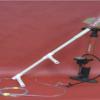
Handheld Water Bottle Rocket & Launcher
Source Institutions
In this activity, learners build handheld rockets and launchers out of PVC pipes and plastic bottles. Use this activity to demonstrate acceleration, air pressure, and Newton's Laws of Motion.

Lego Man Jump
Source Institutions
In this activity, learners are challenged to create a parachute using easily sourced materials in order to transport a LEGO figure safely to the ground.
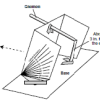
Using a Sundial
Source Institutions
In this activity (on page 12 of the PDF), learners make a sundial (shadow clock) appropriate for their geographic location in the northern hemisphere and use it to tell time.
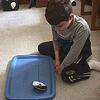
Benham's Disk
Source Institutions
In this activity, learners make a Benham Top to explore visual illusions and optics.
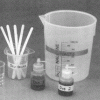
To Dye For
Source Institutions
Learners add two dyes to mineral oil and water, and then compare their miscibility (how well they mix) in each.
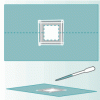
Tools of Magnification
Source Institutions
In this activity related to microbes, learners use water drops and hand lenses to begin the exploration of magnification. This activity also introduces learners to the microscope.
Save Your Ears
Source Institutions
This game depicts a woman going through her day, faced with various loud sounds.
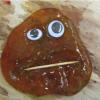
Squidgy Slime
Source Institutions
In this chemistry activity, learners transform two ingredients (4% polyvinyl alcohol solution and 4% borax solution) into gooey slime.
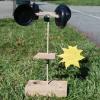
Weather Vane and Anemometer
Source Institutions
In this meteorology activity, learners construct simple devices to measure the direction and speed of wind.
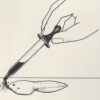
Water Breathers
Source Institutions
In this activity and/or field trip, learners investigate the water currents that aquatic animals create when they breathe, feed, and propel themselves through water.
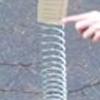
Spring Scale Engineering
Source Institutions
In this activity, learners explore how spring scales work and how they are used for non-exact weight measurement.

What is a "Model"?
Source Institutions
In this activity, learners simulate the behavior of the atmosphere.