
Search Results
Showing results 1961 to 1980 of 2375
Homemade Butter
Source Institutions
In this activity, learners will turn cream and salt into butter—using marbles. Learners will explore how shaking up fat globules help them create homemade butter.
Soap-Film Painting
Source Institutions
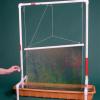
Make a big canvas of iridescent color with pvc pipe! In this Exploratorium Science Snack, you'll need to cut and assemble some PVC pipe, but the pay-off, the soap-bubble canvas, is big.
Nebula in a Jar
Source Institutions
In this activity, learners will build a model of a nebula using cotton balls and colored water. Astronomers photograph nebulas and add colors to provide information about the nebula's composition.
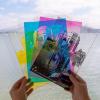
The Three Little Pigments: Science activity that demonstrates the primary and secondary colors of lightScience activity that demonstrates the primary and secondary colors of light The Three Little Pigments Know your C, M, Y, and K.
Source Institutions
Align four color transparencies, each one a single color (cyan, magenta, yellow, and black), and see a beautiful full color image.
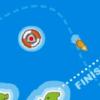
Cup Sailing Game
Source Institutions
In this online Flash game, learners will captain a sailing challenge, adjusting boat direction and sails, seeking the way to take greatest advantage of varying wind speeds and directions to catch the
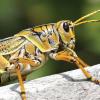
Invent an Insect
Source Institutions
In this creative activity, learners will find out what makes an insect an insect by studying examples of insect adaptations and by examining why there are so many different types of insects.
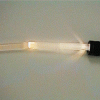
Glue Stick Sunset
Source Institutions
In this activity, learners explore why the sky is blue. Learners model the scattering of light by the atmosphere, which creates the blue sky and red sunset, using a flashlight and clear glue sticks.
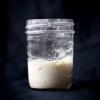
Wild Sourdough
Source Institutions
In this activity, learners explore chemistry and the microbial world by making their own sourdough starter and bread at home using only flour and water.
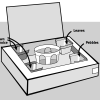
There’s No Place Like Home!
Source Institutions
In this activity, learners make their own bug boxes and test the habitat preference of selected "minibeasts" (bugs).
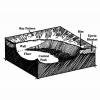
Mars Perseverance Activity: Mud Splat Craters
Source Institutions
In this activity, learners explore the physics of impact craters from their own backyard using mud. Learners are encouraged to match features of real impact craters to their models.

Bleeding Paper
Source Institutions
In this activity on page 3 of the PDF, learners discover how science and Halloween are fun companions as they make paper bleed.
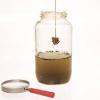
Planaria Fishing
Source Institutions
In this activity, learners capture and observe planaria, which are worms that eat tiny pond critters.
Construction and Destruction
Source Institutions
In this three/four-day lesson, learners calculate perimeters and areas and draw the castle plan to scale.

Squishy Letters
Source Institutions
In this activity, learners will practice writing while making a fun messy craft. Learners will explore texture and color as well as develop writing and fine motor skills through this activity.

Momentum Machine: Speed up your spin
Source Institutions
Spin in an office chair holding milk jugs! Plus, learn physics. Very fun (but stay safe) activity from the Exploratorium Science Snacks series.
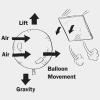
Sky Floater Challenge
Source Institutions
In this design challenge activity, learners make a balloon hover at eye level for five seconds, and then make it move by creating air currents.
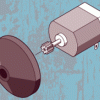
Motorized Car
Source Institutions
In this design challenge activity, learners build a car that uses a battery-operated motor to "drive" at least ten feet.
Ride on a Slide: Toys or Tubes Ride Slopes and Angles
Source Institutions
This activity is a hit for family events and all ages—some will finish in 45 minutes; others can go on for hours.
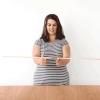
Center of Gravity
Source Institutions
A simple, yet fun activity that lets learners find the center of balance of a ruler (or any long thin object). Developed by the Exploratorium and no assembly needed.
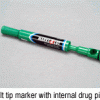
Chromatography
Source Institutions
In this activity (page 3 of the PDF), learners will observe a physical change.